顯示具有 English Vocabulary and Etymology 標籤的文章。 顯示所有文章
顯示具有 English Vocabulary and Etymology 標籤的文章。 顯示所有文章
2016年1月9日 星期六


English Vocabulary and Eytmology(Week17)
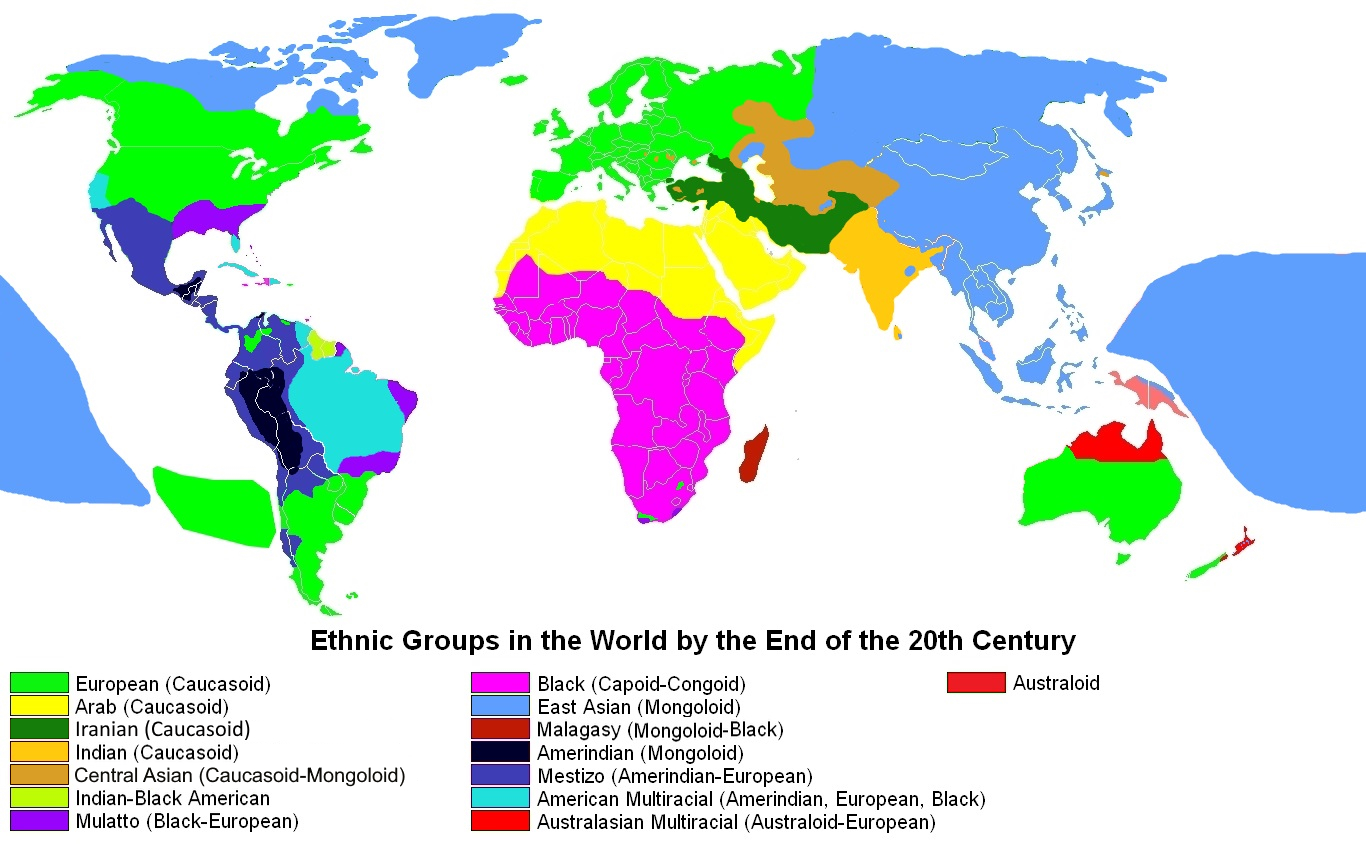
Ethnic group
An ethnic group or ethnicity is a category of people who identify with each other based on common ancestral, social, cultural or national experience. Unlike most other social groups, ethnicity is primarily an inherited status. Membership of an ethnic group tends to be defined by a shared cultural heritage, ancestry, origin myth, history, homeland, language and/or dialect, symbolic systems such as religion, mythology and ritual, cuisine, dressing style, art, and physical appearance.Ethnic groups, derived from the same historical founder population, often continue to speak related languages and share a similar gene pool. By way of language shift, acculturation, adoption and religious conversion, it is possible for some individuals or groups to leave one ethnic group and become part of another (except for ethnic groups emphasizing racial purity as a key membership criterion).
Ethnicity is often used synonymously with ambiguous terms such as nation or people.
Harriet Tubman

The History of English
Prefix / Root / Suffix
ab-: away fromabandon (v.) to give up; discontinue; withdraw from
example: The broken bike was found abandoned by the river side.
aboriginal (adj.) original or earliest known; native; indigenous
example: Spence is the leader of an aboriginal community called Attawapiskat in northern Ontario.
ad-: toward
adventure (n.) an exciting or very unusual experience
example: The storm madeour hike a real adventure.
adroit (adj.) cleverly skillful, resourceful, or ingenious
example: He is adroit at making excuses.
Vocabulary
henpeck (v.) to browbeat, bully, or intimidate (one's husband, boyfriend, etc.)example: My mother always henpecks my father.

checkmate (n.) an act or instance of maneuvering the opponent's king into a check from which it cannot escape, thus bringing the game to a victorious conclusion
example: His efforts to escape met with a checkmate.

English Vocabulary and Etymology(Week16)
Prefix / Root / Suffix
cardi-: heartcardinal (n.) Roman Catholic Church. a high ecclesiastic appointed by the pope to the College of Cardinals and ranking above every other ecclesiastic but the pope
example: I've had dinner with Bill and Cardinal Smith.
cardiac (adj.) of or relating to the heart
example: Mandy has a cardiac disease.
mega-: big
megalomania (n.) a symptom of mental illness marked by delusions of greatness, wealth, etc
example: The dictator was suffering from megalomania.
megastar (n.) a very well-known personality in the entertainment business
example: Jolin is a megastar in Taiwan.
post-: behind
postdate (v.) to follow in time
example: His recognition as an artist postdated his death.
postpone (v.) to put off to a later time; defer
example: People should postpone private gain to the public welfare.
trans-: across
transcend (v.) to rise above or go beyond; overpass; exceed
example: Human should always transcend their limits.
transcript (n.) a written, typewritten, or printed copy
example: A transcript of the tapes was presented as evidence in court.
nano-: extremely small
nanotechnology (n.) a technology executed on the scale of less than 100 nanometers, the goal of which is to control individual atoms and molecules
example: Nanotechnology bears a special burden.
hyper-: over / beyond
hyperactive (adj.) (of children) displaying exaggerated physical activity sometimes associated with neurologic or psychologic causes
example: He was a slow developer and hyperactive.
hypertension (n.) excessive or extreme emotional tenseness
example: Hypertension is not an unusual occurrence in the PACU.
hypo-: under
hypodermic (adj.) characterized by the introduction of medicine or drugs under the skin
example: He was frightened at seeing the hypodermic needle.
hypocrisy (n.) the practice of professing standards, beliefs, etc, contrary to one's real character or actual behaviour, esp the pretence of virtue and piety
example: I have no brow of such worldly hypocrisy.
hypochondria (n.) excessive worry or talk about one's health
example: We know the only thing more hopeless than his hypochondria is his romanticism.
ndum-: to be done
referendum (n.) the principle or practice of referring measures proposed or passed by a legislative body to the vote of the electorate for approval or rejection.
example: Many people abstained in the referendum.
memorandum (n.) a short note designating something to be remembered, especially something to be done or acted upon in the future; reminder
example: He sent us a memorandum about the meeting.
Stigma
A term used by members of the Christian faith to describe body marks, sores, or sensations of pain in locations corresponding to the crucifixion wounds of Jesus Christ, such as the hands, wrists, and feet causing extreme pain and torrid affect of humiliation. An individual bearing the wounds of Stigmata is referred to as a Stigmatist.
 >>St. Francis of assisi
An Italian Roman Catholic friar and preacher. He founded the men's Order of Friars Minor, the women’s Order of Saint Clare, the Third Order of Saint Francis and the Custody of the Holy Land. Francis is one of the most venerated religious figures in history.
Pope
The Bishop of Rome and the leader of the worldwide Catholic Church. The primacy of the Roman bishop is largely derived from his role as the traditional successor to Saint Peter, to whom Jesus is supposed to have given the keys of Heaven and the powers of "binding and loosing", naming him as the "rock" upon which the church would be built. The current pope is Francis, who was elected on 13 March 2013, succeeding Benedict XVI.>>St. Peter
 According to the New Testament, Saint Peter was one of the Twelve Apostles of Jesus Christ, leaders of the early Christian Church. The Roman Catholic Church considers him to be the first Pope, ordained by Jesus in the "Rock of My Church" dialogue in Matthew 16:18. The ancient Christian churches all venerate Peter as a major saint and associate him with founding the Church of Antioch and later the Church in Rome, but differ about the authority of his various successors in present-day Christianity.
Key of Heaven
In the Gospel of Matthew 16:19, Jesus says to Peter, "I will give you the keys of the kingdom of heaven, and whatever you bind on earth shall be bound in heaven, and whatever you loose on earth shall be loosed in heaven.">>Pope Benedict XVI
_4.jpg) Pope of the Catholic Church from 2005 until his resignation in 2013. On 11 February 2013, Benedict announced his resignation in a speech in Latin before the cardinals, citing a "lack of strength of mind and body" due to his advanced age. His resignation became effective on 28 February 2013. He is the first pope to resign since Pope Gregory XII in 1415, and the first to do so on his own initiative since Pope Celestine V in 1294. As pope emeritus, Benedict retains the style of His Holiness, and the title of Pope, and continues to dress in the papal color of white. He was succeeded by Pope Francis on 13 March 2013, and he moved into the newly renovated Mater Ecclesiae monastery for his retirement on 2 May 2013.
Pope of the Catholic Church from 2005 until his resignation in 2013. On 11 February 2013, Benedict announced his resignation in a speech in Latin before the cardinals, citing a "lack of strength of mind and body" due to his advanced age. His resignation became effective on 28 February 2013. He is the first pope to resign since Pope Gregory XII in 1415, and the first to do so on his own initiative since Pope Celestine V in 1294. As pope emeritus, Benedict retains the style of His Holiness, and the title of Pope, and continues to dress in the papal color of white. He was succeeded by Pope Francis on 13 March 2013, and he moved into the newly renovated Mater Ecclesiae monastery for his retirement on 2 May 2013.
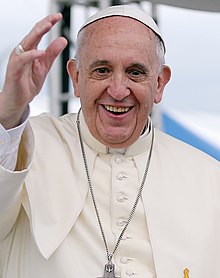 >>Pope Francis
The 266th and current Pope of the Roman Catholic Church. Following the resignation of Pope Benedict XVI on 28 February 2013. He chose Francis as his papal name in honor of Saint Francis of Assisi. Throughout his public life, Pope Francis has been noted for his humility, emphasis on God's mercy, concern for the poor, and commitment to interfaith dialogue. He is credited with having a humble, less formal approach to the papacy than his predecessors, for instance choosing to reside in the Domus Sanctae Marthae guesthouse rather than in the papal apartments of the Apostolic Palace used by his predecessors. .jpg)
Stephen Crane
 Stephen Crane (November 1, 1871 – June 5, 1900) was an American poet, novelist, and short story writer. Prolific throughout his short life, he wrote notable works in the Realist tradition as well as early examples of American Naturalism and Impressionism. He is recognized by modern critics as one of the most innovative writers of his generation.
The ninth surviving child of Protestant Methodist parents, Crane began writing at the age of four and had published several articles by the age of 16. Having little interest in university studies, he left college in 1891 to work as a reporter and writer. Crane's first novel was the 1893 Bowery tale Maggie: A Girl of the Streets, generally considered by critics to be the first work of American literary Naturalism. He won international acclaim in 1895 for his Civil War novel The Red Badge of Courage, which he wrote without having any battle experience.
The Red Badge of Courage is a war novel by American author Stephen Crane (1871–1900). Taking place during the American Civil War, the story is about a young private of the Union Army, Henry Fleming, who flees from the field of battle. Overcome with shame, he longs for a wound, a "red badge of courage," to counteract his cowardice. When his regiment once again faces the enemy, Henry acts as standard-bearer.
2016年1月7日 星期四
English Vocabulary and Etymology(Week15)
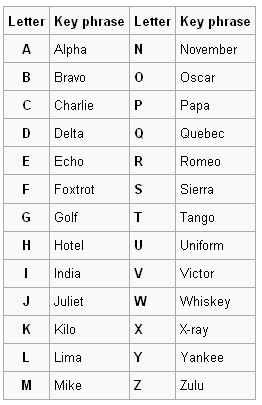
The most widely used radiotelephonic spelling alphabet. Although often called "phonetic alphabets", spelling alphabets are not associated with phonetic transcription systems such as the International Phonetic Alphabet.
The 26 code words in the NATO phonetic alphabet are assigned to the 26 letters of the English alphabet in alphabetical order.

 The Immaculate Conception, according to the teaching of the Catholic Church, was the conception of the Blessed Virgin Mary in the womb of her mother, Saint Anne, free from original sin by virtue of
the foreseen merits of her son Jesus Christ. The Catholic Church teaches that Mary was conceived by normal biological means, but God acted upon her soul (keeping her "immaculate") at the time of her conception.
The Immaculate Conception is commonly and mistakenly taken to mean the conception of Mary's son Jesus Christ in her own womb, and the Virgin Birth of Jesus. These are covered by the Doctrine of Incarnation, while the Immaculate Conception deals with the conception of Mary herself, not that of her son.
 An American who, while serving as a physician in the United States Navy and afterwards, became famous for his humanitarian and anti-communist political activities in South East Asia and the United States until his early death from cancer. He authored three popular books that described his activities in Vietnam and Laos: Deliver Us From Evil, The Edge of Tomorrow, and The Night They Burned the Mountain. These three were later collected into a single volume and published as "Dr. Tom Dooley's Three Great Books." The book jacket of "The Edge of Tomorrow" states that Dooley traveled "to a remote part of the world in order to combat the two greatest evils afflicting it: disease and Communism.


The 26 code words in the NATO phonetic alphabet are assigned to the 26 letters of the English alphabet in alphabetical order.
The Book of Revelation, often known simply as Revelation or The Apocalypse of John, is a book of the New Testament that occupies a central place in Christian eschatology. Its title is derived from the first word of the text, written in Koine Greek: apokalypsis, meaning "unveiling" or "revelation". The Book of Revelation is the only apocalyptic document in the New Testament canon (although there are short apocalyptic passages in various places in the Gospels and the Epistles).
The New Testament is the second major part of the Christian biblical canon, the first part being the Old Testament, based on the Hebrew Bible. The Greek New Testament discusses the teachings and person of Jesus, as well as events in first-century Christianity. Christians regard both the Old and New Testaments together as sacred scripture. The New Testament (in whole or in part) has frequently accompanied the spread of Christianity around the world. It reflects and serves as a source for Christian theology and morality.

- Gospel of Matthew: the first book of the New Testament. The narrative tells how the Messiah, Jesus, rejected by Israel, finally sends the disciples to preach his Gospel to the whole world
- Gospel of Mark: the second book of the New Testament.Mark tells of the ministry of Jesus from his baptism by John the Baptist to his death and burial and the discovery of the empty tomb – there is no genealogy or birth narrative, nor, in the original ending at chapter 16, any post-resurrection appearances.
- Gospel of Luke: the third and longest of the four canonical Gospels. It tells of the origins, birth, ministry, death, resurrection and ascension of Jesus Christ.
- Gospel of John: In the New Testament it traditionally appears fourth, after the synoptic gospels of Matthew, Mark, and Luke. John begins with the witness and affirmation of John the Baptist and concludes with the death, burial, resurrection, and post-resurrection appearances of Jesus.
 The Immaculate Conception, according to the teaching of the Catholic Church, was the conception of the Blessed Virgin Mary in the womb of her mother, Saint Anne, free from original sin by virtue of
the foreseen merits of her son Jesus Christ. The Catholic Church teaches that Mary was conceived by normal biological means, but God acted upon her soul (keeping her "immaculate") at the time of her conception.
The Immaculate Conception is commonly and mistakenly taken to mean the conception of Mary's son Jesus Christ in her own womb, and the Virgin Birth of Jesus. These are covered by the Doctrine of Incarnation, while the Immaculate Conception deals with the conception of Mary herself, not that of her son.
"Frailty, thy name is woman"
From Shakespeare's Hamlet, 1602:
Must I remember? why, she would hang on him,
As if increase of appetite had grown
By what it fed on: and yet, within a month -
Let me not think on't - Frailty, thy name is woman! -
A little month, or ere those shoes were old
With which she follow'd my poor father's body...
Hamlet is angry that his mother, Gertrude, has married his uncle Claudius within a month of his father's death. The speech generalizes the attribution of weakness of character from one particular woman to womankind.
 An American who, while serving as a physician in the United States Navy and afterwards, became famous for his humanitarian and anti-communist political activities in South East Asia and the United States until his early death from cancer. He authored three popular books that described his activities in Vietnam and Laos: Deliver Us From Evil, The Edge of Tomorrow, and The Night They Burned the Mountain. These three were later collected into a single volume and published as "Dr. Tom Dooley's Three Great Books." The book jacket of "The Edge of Tomorrow" states that Dooley traveled "to a remote part of the world in order to combat the two greatest evils afflicting it: disease and Communism.
A tactile writing system used by people who are blind and low vision. It is traditionally written with embossed paper. Braille-users can read computer screens and other electronic supports thanks to refreshable braille displays. They can write braille with the original slate and stylus or type it on a braille writer, such as a portable braille note-taker, or on a computer that prints with a braille embosser.
A right to silence warning given by police in the United States to criminal suspects in police custody (or in a custodial interrogation) before they are interrogated to preserve the admissibility of their statements against them in criminal proceedings.
Vocabulary
boastful (adj.) given to or characterized by boasting
example: He is boastful of his house.
rosery (n.) a bed or garden of roses
example: There is a beautiful rosery in the park.
afflict (v.) to distress with mental or bodily pain; trouble greatly or grievously
example: He was afflicted with cancer
2016年1月5日 星期二
English Vocabulary and Etymology(Week14)
Prefix/Root/Suffix
pro-: in favor ofproponent (n.) a person who argues in favor of something
example: Jane is a proponent of gender equality.
protagonist (n.) the leading character, hero, or heroine of a drama or other literary work
example: She created a handsome young man as the protagonist of her new novel.
omni-: all
omniscient (adj.) having complete or unlimited knowledge, awareness, or understanding; perceiving all things
example: The novel has an omniscient narrator.
omnipotent (adj.) almighty or infinite in power, as God
example: Jeson is an omnipotent man because he is good at anything.
-potent / -petent: power
potentate (n.) a person who possesses great power, as a sovereign, monarch, or ruler
example: The potentate in the city is an abominable person.
competent (adj.) having suitable or sufficient skill, knowledge, experience, etc.
example: Is Mary competent as a teacher?
astro-: star
astrology (n.) the study of the motions and relative positions of the planets, sun, and moon, interpreted in terms of human characteristics and activities
example: My sister devotes herself to Astrology.
astronaut (n.) a person engaged in or trained for spaceflight
example: My brother's dream is being an astronaut.
astronomy (n.) the science that deals with the material universe beyond the earth's atmosphere
example: Astronomy, as distinct from astrology, is an exact science.
ver- / vir-: truth
verdict (v.) the findings of a jury on the issues of fact submitted to it for examination and trial; judgment
example: My wife's verdict on my cooking was very favourable.
virtual (adj.) having the essence or effect but not the appearance or form of
example: He is in a state of virtual slavery.
-nov-: new
novice (n.) a person who is new to the circumstances, work, etc.
example: I'm a complete novice at skiing.
novel (n.) an extended work in prose, either fictitious or partly so, dealing with character, action, thought, etc, esp in the form of story
example: The novel is very interesting.
innovation (n.) something new or different introduced
example: The innovation is perfect.
hetero-: different
heterosexual (adj.) Biology. pertaining to the opposite sex or to both sexes
example: The handsome, nice and heterosexual men are married.
antonym: homosexual
* Alan Turing
 Alan Mathison Turing was born on 23 June, 1912. He was a mathematician, cryptanalyst and the father of computer science. His pioneering work in the 1930s cracked the Nazi’s Enigma codes in World War II, and led to the invention of the modern computer. Turing died in 1954 of cyanide poisoning, two years after he was convicted for homosexual activity and branded a security risk
homo-: same
homogeneous (adj.) of the same kind or nature; essentially alike
example: Japan has a largely homogeneous population.
Vocabulary
analogy (n.) a comparison made to show such a similarityexample: I try to draw an analogy between two pictures.
commencement (n.) the ceremony of conferring degrees or granting diplomas at the end of the academic year
example: I don't join the commencemont of senior high school
petite (adj.) (of a woman) short and having a small, trim figure; diminutive
example: Tina is a petite girl.
cinnamon (n.) a tropical tree, the spice obtained from the bark of this tree, used for flavouring food and drink
example: I don't like cinnamon.
onomatopoeia (n.) the formation of a word, as cuckoo, meow, honk, or boom, by imitation of a sound made by or associated with its referent
example: The onomatopoeia is a common phenomenon both in English and Chinese.
scrape(= skyscraper) (n.) a very tall multistorey building
example: The scrape is too tall to see the top of it.
computer illiterate (n.) a peron who doesn't know how to use computer
example: Peter is a computer illiterate.
cabinet (n.) 1. a piece of furniture with shelves, drawers, etc., for holding or displaying items
2. a council advising a president, sovereign, etc., especially the group of ministers or executives responsible for the government of a nation
example: 1. The cabinet is beautiful.
2. The cabinet is an organization in the government.
theorem (n.) a rule or law, especially one expressed by an equation or formula
example: Geometrical theorems grew out of empirical methods.
Dead Poets Society "O Captain! My Captian"

Keating is fired and Nolan takes over teaching the class. Keating interrupts the class to collect personal articles; before he leaves Todd shouts that all of them were forced to sign the letter that resulted in his dismissal and that Neil's death was not his fault. Todd stands on his desk and salutes Keating with the words "O Captain! My Captain!". Over half the rest of the class does the same, ignoring Nolan's orders to sit down until he gives up. Deeply touched by their gesture, Keating thanks the boys before departing.
O Captain! My Captian

Walt Whitman
An American poet, essayist and journalist. A humanist, he was a part of the transition between transcendentalism and realism, incorporating both views in his works. Whitman is among the most influential poets in the American canon, often called the father of free verse. His work was very controversial in its time, particularly his poetry collection Leaves of Grass, which was described as obscene for its overt sexuality.
James Madison


After the constitution had been drafted, Madison became one of the leaders in the movement to ratify it. His collaboration with Alexander Hamilton and John Jay produced The Federalist Papers (1788). Circulated only in New York at the time, they would later be considered among the most important treatises in support of the Constitution. He was also a delegate to the Virginia constitutional ratifying convention, and was instrumental to the successful ratification effort in Virginia. Like most of his contemporaries, Madison changed his political views during his life. During the drafting and ratification of the constitution, he favored a strong national government, though later he grew to favor stronger state governments, before settling between the two extremes late in his life.
Nihilism
A philosophical doctrine that suggests the lack of belief in one or more reputedly meaningful aspects of life. Most commonly, nihilism is presented in the form of existential nihilism, which argues that life is without objective meaning, purpose, or intrinsic value.Moral nihilists assert that morality does not inherently exist, and that any established moral values are abstractly contrived. Nihilism can also take epistemological or ontological/metaphysical forms, meaning respectively that, in some aspect, knowledge is not possible, or that reality does not actually exist.2015年12月27日 星期日
English Vocabulary and Etymology(Week13)
Prefix/Root/Suffix
-er, -or, -ist, -ian, -ant: suffix for people's (profession)-er
teacher (n.) a person who teaches or instructs, especially as a profession; instructor
example: My dream is being a teacher.
catcher (n.) Baseball. the player stationed behind home plate, whose chief duty is to catch pitches not hit by the batter
example: The catcher caught the ball.
painter (n.) a person who coats walls or other surfaces with paint, especially as an occupation
example: The painter is painting the wall.
-or
doctor (n.) a person licensed to practice medicine, as a physician, surgeon, dentist, or veterinarian
example: An apple a day keeps the doctor away.
-ist
artist (n.) a person who produces works in any of the arts that are primarily subject to aesthetic criteria
example: My brother is an artist.
violinist (n.) a person who plays the violin
example: The violinist performed well.
psychiatrist (n.) a physician who practices psychitry
example: Tim is the best psychiatrist in there.
-ian
physician (n.) a person who is legally qualified to practice medicine
example: My sister is a physician in the hospital
comedian (n.) a professional entertainer who amuses by relating anecdotes, acting out comical situations, engaging in humorous repartee
example: The performance of this comedian is so interesting that audiences laugh loudly.
-ant
applicant (n.) a person who applies for or requests something
example: As the wage of the job was ow, there were few applicants for it.
attendant (n.) a person who attends another, as to perform a service
example: The atendant of this activity is too many to count.
March / Parade / Demonstration
March (n.) the organized, uniformed, steady and rhythmic walking forward, usually associated with military troops
Parade (n.) a large public procession, usually including a marching band and often of a festive nature, held in honor of an anniversary, person, event, etc

Demonstration (n.) a public exhibition of the attitude of a group of persons toward a controversial issue, or other matter, made by picketing, parading, etc

A Farewell to Arms
A Farewell to Arms is a novel by Ernest Hemingway set during the Italian campaign of World War I. It is about a love affair between the expatriate American Henry and Catherine Barkley against the backdrop of the First World War, cynical soldiers, fighting and the displacement of populations.Ernest Hemingway

Eastern Orthodox Church

The second largest Christian Church in the world,with an estimated 225–300 million adherents.
The Eastern Orthodox Church is one of the oldest religious institutions in the world, teaching that it is the One, Holy, Catholic and Apostolic Church established by Jesus Christ in his Great Commission to the apostles, and practicing what it understands to be the original faith passed down from the Apostles.
Juvenile court

The fountain of Youth

訂閱:
文章 (Atom)