2017年1月9日 星期一

English Children's Literature(Week8)


  • Mother Goose

The figure of 
Mother Goose is the imaginary author of a collection of fairy tales and nursery rhymes often published as (Old) Mother Goose's Rhymes.

◉Example of nursery rhymes

London Bridge is falling down 

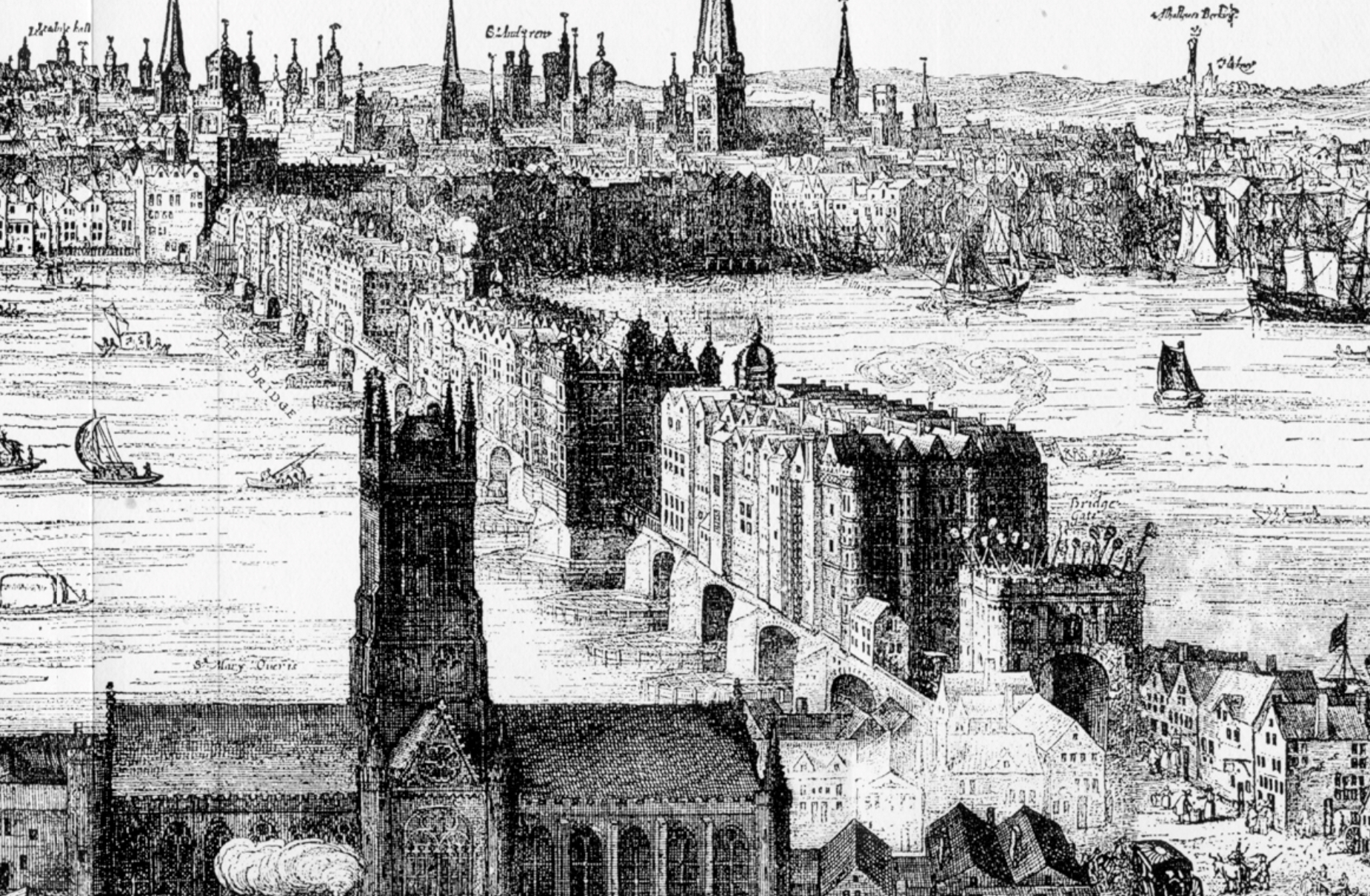
London Bridge (1616) by Claes Van Visscher.jpg
"London Bridge Is Falling Down" (also known as "My Fair Lady" or "London Bridge") is a traditional English nursery rhyme and singing game, which is found in different versions all over the world. It deals with the depredations of London Bridge and attempts, realistic or fanciful, to repair it. It may date back to bridge rhymes and games of the Late Middle Ages, but the earliest records of the rhyme in English are from the seventeenth century. The lyrics were first printed in close to their modern form in the mid-eighteenth century and became popular, particularly in Britain and the United States in the nineteenth century.
London Bridge is falling down,
Falling down, falling down.
London Bridge is falling down,
My fair lady.

Ⅱ Sing a Song of Sixpence

"Sing a Song of Sixpence" is a well-known English nursery rhyme, perhaps originating in the 18th century. It is listed in the Roud Folk Song Index as number 13191. There are references to this rhyme in the song THE BALL OF KERRIEMUIR (BALLYNORE) in the version recorded by Robert Burns (25 January 1759 – 21 July 1796) which suggests that its origins are older than the 18th century.

A pocket full of rye.
Four and twenty blackbirds,
Baked in a pie.
When the pie was opened
The birds began to sing;
Wasn't that a dainty dish,
To set before the king
The king was in his counting house,
Counting out his money;
The queen was in the parlour,
Eating bread and honey.
The maid was in the garden,
Hanging out the clothes,
When down came a blackbird
And pecked off her nose.
Ⅲ Humpty Dumpty

Denslow's Humpty Dumpty 1904.jpg
Humpty Dumpty is a character in an English nursery rhyme, probably originally a riddle and one of the best known in the English-speaking world. He is typically portrayed as an anthropomorphic egg, though he is not explicitly described so. The first recorded versions of the rhyme date from late eighteenth-century England and the tune from 1870 in James William Elliott's National Nursery Rhymes and Nursery Songs. Its origins are obscure and several theories have been advanced to suggest original meanings.
Humpty Dumpty sat on a wall,
Humpty Dumpty had a great fall.
All the king's horses and all the king's men
Couldn't put Humpty together again.
*Humpty Dumpty and Alice


Humpty Dumpty appears in Lewis Carroll's Through the Looking-Glass (1872), where he discusses semantics and pragmatics with Alice. 

Ⅳ There was an Old Woman Who Lived in a Shoe


"There was an Old Woman Who Lived in a Shoe" is a popular English language nursery rhyme, with a Roud Folk Song Index number of 19132. Debates over its meaning and origin have largely centered on attempts to match the old woman with historical female figures who have had large families, although King George II (1683–1760) has also been proposed as the rhyme's subject.
There was an old woman who lived in a shoe.
She had so many children, she didn't know what to do;
She gave them some broth without any bread;
Then whipped them all soundly and put them to bed.
Ⅴ Old King Cole

Old King Cole 2 - WW Denslow - Project Gutenberg etext 18546.jpg
"Old King Cole" is a British nursery rhyme first attested in 1708. Though there is much speculation about the identity of King Cole, it is unlikely that he can be identified reliably as any historical figure. It has a Roud Folk Song Index number of 1164. The poem describes a merry king who called for his pipe, bowl, and musicians, with the details varying among versions.
Old King Cole was a merry old soul,
And a merry old soul was he;
He called for his pipe, and he called for his bowl,
And he called for his fiddlers three.
Every fiddler he had a fiddle,
And a very fine fiddle had he;
Oh there's none so rare, as can compare,
With King Cole and his fiddlers three.
Jack and Jill

Jack and Jill 2 - WW Denslow - Project Gutenberg etext 18546.jpg
"Jack and Jill" (sometimes "Jack and Gill", particularly in earlier versions) is a traditional English nursery rhyme. The Roud Folk Song Index classifies this tune and its variations as number 10266. The rhyme dates back at least to the 18th century and exists with different numbers of verses each with a number of variations. Several theories have been advanced to explain its origins and to suggest meanings for the lyrics. The original rhyme included Kye and Jill but it later changed Kye to Jack to prevent sulking in the 1700's.
Jack and Jill went up the hill
To fetch a pail of water .
Jack fell down and broke his crown,
And Jill came tumbling after
Up Jack got, and home did trot
As fast as he could caper;
To old Dame Dob, who patched his nob
With vinegar and brown paper.

  • Teddy Bear

teddy bear is a soft toy in the form of a bear. Developed apparently simultaneously by toymakers Morris Michtom in the U.S. and Richard Steiff in Germany in the early years of the 20th century, and named after President Theodore "Teddy" Roosevelt, the teddy bear became an iconic children's toy, celebrated in story, song, and film. Since the creation of the first teddy bears which sought to imitate the form of real bear cubs, "teddies" have greatly varied in form, style and material. They have become collector's items, with older and rarer "teddies" appearing at public auctions. Teddy bears are among the most popular gifts for children and are often given to adults to signify love, congratulations, or sympathy.


  • Sesame street : Kermit News About Jack Jumping


"Jack Be Nimble" is an English language nursery rhyme. It has a Roud Folk Song Index number of 13902.The rhyme is first recorded in a manuscript of around 1815 and was collected by James Orchard Halliwell in the mid-nineteenth century. Jumping candlesticks was a form of fortune telling and a sport. Good luck was said to be signalled by clearing a candle without extinguishing the flame.
Jack be nimble,
Jack be quick,
Jack jump over
The candlestick

English Children's Literature(Week7)


  • Protagonist/Antagonist

Protagonist: the main character in any story, such as a literary work or drama.
Antagonist: a person or a group of people who opposes a protagonist.


  • Tomboy

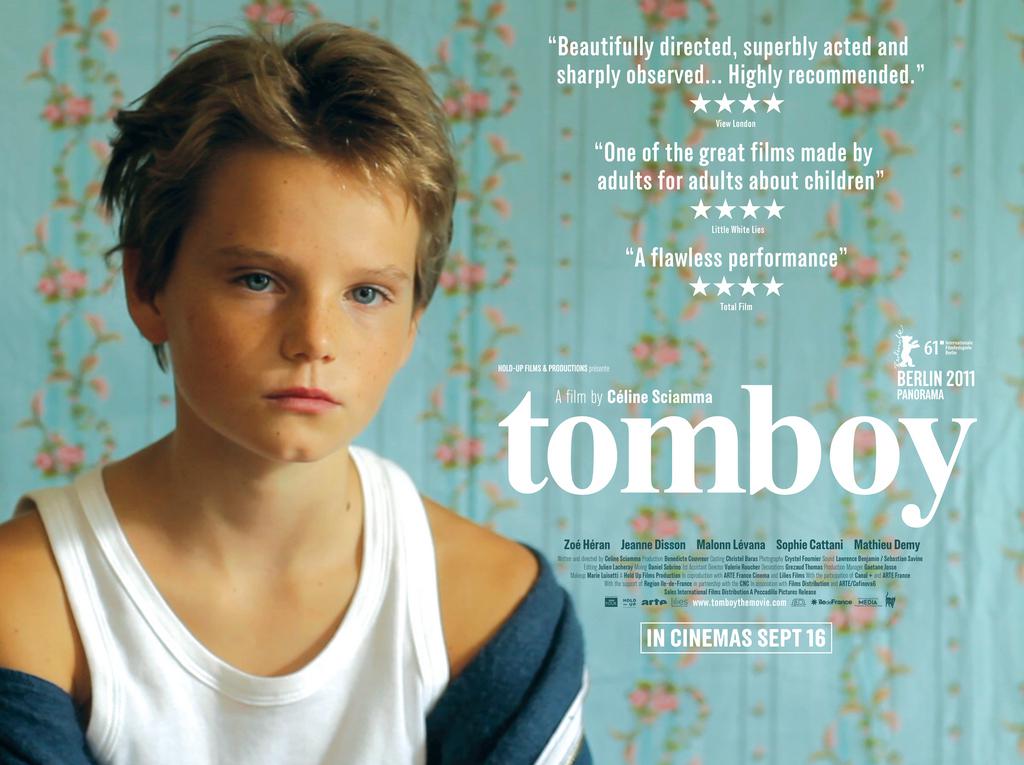
tomboy is a girl who exhibits characteristics or behaviors considered typical of a boy, including wearing masculine clothing and engaging in games and activities that are physical in nature and are considered in many cultures to be unfeminine or the domain of boys. Tomboy, according to the Oxford English Dictionary (OED), "has been connected with connotations of rudeness and impropriety" throughout its use.

  • Miss Potter(2006)

Miss Potter is a 2006 Anglo-American biographical fiction family drama film directed by Chris Noonan. It is a biographical film of children's author and illustrator Beatrix Potter, and combines stories from her own life with animated sequences featuring characters from her stories, such as Peter Rabbit
Miss Potter


  • Bildungsroman

In literary criticism, a Bildungsroman ( German: "novel of formation, education, culture"),[a] novel of formation, novel of education, or coming-of-age story (though it may also be known as a subset of the coming-of-age story) is a literary genre that focuses on the psychological and moral growth of the protagonist from youth to adulthood (coming of age), in which character change is extremely important.

  • Charles Perrault

Charles Perrault (12 January 1628 – 16 May 1703) was a French author and member of the Académie Française. He laid the foundations for a new literary genre, the fairy tale, with his works derived from pre-existing folk tales. The best known of his tales include Le Petit Chaperon Rouge (Little Red Riding Hood), Cendrillon (Cinderella), Le Chat Botté (Puss in Boots), La Belle au bois Dormant (The Sleeping Beauty), and Barbe Bleue (Bluebeard). Some of Perrault's versions of old stories have influenced the German versions published by the Brothers Grimm more than 100 years later. The stories continue to be printed and have been adapted to opera, ballet (such as Tchaikovsky's The Sleeping Beauty), theatre, and film. Perrault was an influential figure in the 17th-century French literary scene, and was the leader of the Modern faction during the Quarrel of the Ancients and the Moderns.

  • Fairy tale

A fairy tale is a type of short story that typically features folkloric fantasy characters, such as dwarves, elves, fairies, giants, gnomes, goblins, mermaids, trolls, unicorns, or witches, and usually magic or enchantments. Fairy tales may be distinguished from other folk narratives such as legends (which generally involve belief in the veracity of the events described) and explicitly moral tales, including beast fables. The term is mainly used for stories with origins in European tradition and, at least in recent centuries, mostly relates to children's literature.

>> Nursery rhyme

A nursery rhyme is a traditional poem or song for children in Britain and many other countries, but usage of the term only dates from the late 18th/early 19th century. In North America the term Mother Goose Rhymes, introduced in the mid-18th century, is still often used.


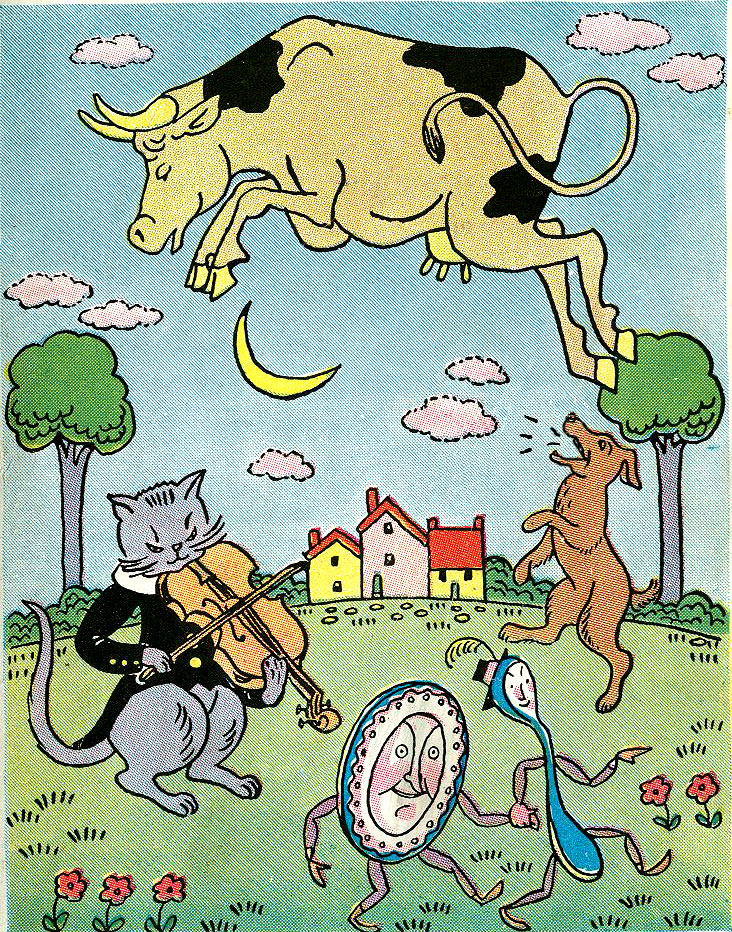
Hey Diddle Diddle
Hey diddle diddle,
The cat and the fiddle,
The cow jumped over the moon.
The little dog laughed,
To see such sport,
And the dish ran away with the spoon.

◎arbitary facts 沒道理的事


Bonnet (Mother Goose)
A term for a wide variety of styles of headgear for both sexes, but most often female, which has been in use from the Middle Ages to the present.

The Tale of Peter Rabbit is a British children's book written and illustrated by Beatrix Potter that follows mischievous and disobedient young Peter Rabbit as he is chased about the garden of Mr. McGregor. He escapes and returns home to his mother, who puts him to bed after dosing him with camomile tea. The tale was written for five-year-old Noel Moore, son of Potter's former governess Annie Carter Moore, in 1893. It was revised and privately printed by Potter in 1901 after several publishers' rejections, but was printed in a trade edition by Frederick Warne & Co. in 1902. The book was a success, and multiple reprints were issued in the years immediately following its debut. It has been translated into 36 languages, and with 45 million copies sold it is one of the best-selling books of all time.

  • Beatix Potter

Helen Beatrix Potter (28 July 1866 – 22 December 1943) was an English writer, illustrator, natural scientist, and conservationist best known for her children's books featuring animals, such as those in The Tale of Peter Rabbit.

◎ Orlando 美麗佳人
Orlando is a 1992 British film based on Virginia Woolf's novel Orlando: A Biography, starring Tilda Swinton as Orlando, Billy Zane as Marmaduke Bonthrop Shelmerdine, and Quentin Crisp as Queen Elizabeth I. It was directed by Sally Potter.

2017年1月7日 星期六

English Children's Literature(Week6)


  • Alliteration

Alliteration is a stylistic literary device identified by the repeated sound of the first letter in a series of multiple words, or the repetition of the same letter sounds in stressed syllables of a phrase.


To Helen

Helen, thy beauty is to me
Like those Nicean barks of yore,
That gently, o'er a perfum'd sea,
The weary way-worn wanderer bore
To his own native shore.

On desperate seas long wont to roam,
Thy hyacinth hair, thy classic face,
Thy Naiad airs have brought me home
To the beauty of fair Greece,
And the grandeur of old Rome.

Lo ! in that little window-niche
How statue-like I see thee stand!
The folded scroll within thy hand —
A Psyche from the regions which
Are Holy land !


  •  The Tyger  by William Blake

Tyger Tyger, burning bright,
In the forests of the night;
What immortal hand or eye,
Could frame thy fearful symmetry?
In what distant deeps or skies.
Burnt the fire of thine eyes?
On what wings dare he aspire?
What the hand, dare seize the fire?
And what shoulder, & what art,
Could twist the sinews of thy heart?
And when thy heart began to beat,
What dread hand? & what dread feet?
What the hammer? what the chain,
In what furnace was thy brain?
What the anvil? what dread grasp,
Dare its deadly terrors clasp!
When the stars threw down their spears
And water'd heaven with their tears:
Did he smile his work to see?
Did he who made the Lamb make thee?
Tyger Tyger burning bright,
In the forests of the night:
What immortal hand or eye,
Dare frame thy fearful symmetry?

  • John Donne

John Donne (22 January 1573 – 31 March 1631) was an English poet and cleric in the Church of England.
He is considered the pre-eminent representative of the metaphysical poets. His works are noted for their strong, sensual style and include sonnets, love poems, religious poems, Latin translations, epigrams, elegies, songs, satires and sermons. His poetry is noted for its vibrancy of language and inventiveness of metaphor, especially compared to that of his contemporaries. Donne's style is characterised by abrupt openings and various paradoxes, ironies and dislocations. These features, along with his frequent dramatic or everyday speech rhythms, his tense syntax and his tough eloquence, were both a reaction against the smoothness of conventional Elizabethan poetry and an adaptation into English of European baroque and mannerist techniques.

>> A Valediction: Forbidding Mournting

  As virtuous men pass mildly away,  
    And whisper to their souls to go,  
Whilst some of their sad friends do say, 
    "Now his breath goes," and some say, "No."                     

So let us melt, and make no noise,                                      
    No tear-floods, nor sigh-tempests move ; 
'Twere profanation of our joys  
    To tell the laity our love. 

Moving of th' earth brings harms and fears ; 
    Men reckon what it did, and meant ;                               
But trepidation of the spheres,  
    Though greater far, is innocent. 

Dull sublunary lovers' love  
    —Whose soul is sense—cannot admit  
Of absence, 'cause it doth remove                                     
    The thing which elemented it. 

But we by a love so much refined, 
    That ourselves know not what it is,  
Inter-assurèd of the mind,  
    Care less, eyes, lips and hands to miss.                           

Our two souls therefore, which are one,  
    Though I must go, endure not yet  
A breach, but an expansion,  
    Like gold to aery thinness beat. 

If they be two, they are two so                                           
    As stiff twin compasses are two ;  
Thy soul, the fix'd foot, makes no show  
    To move, but doth, if th' other do. 

And though it in the centre sit,  
    Yet, when the other far doth roam,                                 
It leans, and hearkens after it,  
    And grows erect, as that comes home. 

Such wilt thou be to me, who must, 
    Like th' other foot, obliquely run ; 
Thy firmness makes my circle just,                                     
    And makes me end where I begun.  
 
>> Death, be not proud— the film ''Wit''(心靈病房)
Wit is a 2001 American television movie directed by Mike Nichols. The teleplay by Nichols and Emma Thompson is based on the 1999 Pulitzer Prize winning play of the same title by Margaret Edson.Vivian dies at the end of the film, with her voiceover reciting "death be not proud".
>Holy Sonnets: Death, be not proud Related Poem Content Details
Wit,_2001_film.jpgBY JOHN DONNE
Death, be not proud, though some have called thee 
Mighty and dreadful, for thou art not so; 
For those whom thou think'st thou dost overthrow 
Die not, poor Death, nor yet canst thou kill me. 
From rest and sleep, which but thy pictures be, 
Much pleasure; then from thee much more must flow, 
And soonest our best men with thee do go, 
Rest of their bones, and soul's delivery. 
Thou art slave to fate, chance, kings, and desperate men, 
And dost with poison, war, and sickness dwell, 
And poppy or charms can make us sleep as well 
And better than thy stroke; why swell'st thou then? 
One short sleep past, we wake eternally 
And death shall be no more; Death, thou shalt die. 

>> No man is an island by John Donne

No man is an island,
Entire of itself,
Every man is a piece of the continent,
A part of the main.
If a clod be washed away by the sea,
Europe is the less.
As well as if a promontory were.
As well as if a manor of thy friend's
Or of thine own were:
Any man's death diminishes me,
Because I am involved in mankind,
And therefore never send to know for whom the bell tolls; 
It tolls for thee. 


  • Samuel

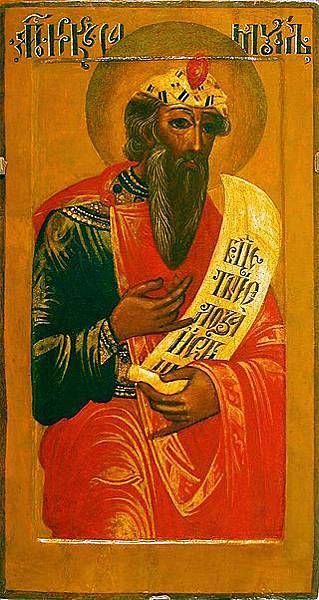
samuel.jpgSamuel, is a leader of ancient Israel in the Books of Samuel in the Hebrew Bible. He is also known as a prophet by Christians and Muslims, and is mentioned in the second chapter of the Qur'an, although not by name.
His status, as viewed by rabbinical literature, is that he was the last of the Hebrew Judges and the first of the major prophets who began to prophesy inside the Land of Israel. He was thus at the cusp between two eras. According to the text of the Books of Samuel, he also anointed the first two kings of the Kingdom of Israel: Saul and David.

  • The Scarlet Letter

The Scarlet Letter: A Romance is an 1850 work of fiction in a historical setting, written by American author Nathaniel Hawthorne. The book is considered to be his "masterwork". Set in 17th-century Puritan Boston, Massachusetts, during the years 1642 to 1649, it tells the story of Hester Prynne, who conceives a daughter through an affair and struggles to create a new life of repentance and dignity. Throughout the book, Hawthorne explores themes of legalism, sin, and guilt.

  • La Comédie humaine 人間喜劇

「La Comédie humaine」的圖片搜尋結果
La Comédie humaine (French pronunciation: ​[la kɔmedi ymɛn], The Human Comedy) is the title of Honoré de Balzac's (1799–1850) multi-volume collection of interlinked novels and stories depicting French society in the period of the Restoration (1815-1830) and the July Monarchy (1830–1848).
The Comédie humaine consists of 91 finished works (stories, novels or analytical essays) and 46 unfinished works (some of which exist only as titles). It does not include Balzac's five theatrical plays or his collection of humorous tales, the "Contes drolatiques" (1832–37). The title of the series is usually considered an allusion to Dante's Divine Comedy; while Ferdinand Brunetière, the famous French literary critic, suggests that it may stem from poems by Alfred de Musset or Alfred de Vigny. While Balzac sought the comprehensive scope of Dante, his title indicates the worldly, human concerns of a realist novelist. The stories are placed in a variety of settings, with characters reappearing in multiple stories.


  • Divine Comedy

The Divine Comedy (ItalianDivina Commedia [diˈviːna komˈmɛːdja]) is a poem by Dante Alighieri, begun c. 1308 and completed 1320, a year before his death in 1321. It is widely considered the preeminent work of Italian literature and is seen as one of the greatest works of world literature. The poem's imaginative vision of the afterlife is representative of the medieval world-view as it had developed in the Western Church by the 14th century. It helped establish the Tuscan language, in which it is written, as the standardized Italian language. It is divided into three parts: InfernoPurgatorio, and Paradiso.


  • Charlotte's Web

▸ the climax of the movie: Humble
「Templeton wilbur」的圖片搜尋結果

Flat characterRound character

    Flat character: "two-dimensional" in that they are relatively uncomplicated and do not change throughout the course of a work. 

    Round character: complex and undergo development, sometimes sufficiently to surprise the reader.

Templeton is a flat character bitter and selfish

   Wilbur is a round characterchange and growth

   Charlotte is neither a round nor flat character

Ordinary miracle (Charlotte's Web song)

 Sarah McLachlan - Ordinary Miracle Lyrics   

It's not that unusual
 When everything is beautiful
 It's just another ordinary miracle today

The sky knows when it's time to snow
 Don't need to teach a seed to grow
 It's just another ordinary miracle today

Life is like a gift they say
 Wrapped up for you every day
 Open up and find a way
 To give some of your own love

Isn't it remarkable?
 Like every time a raindrop falls
 It's just another ordinary miracle today

Birds in winter have their fling
 They always make it home in spring
 It's just another ordinary miracle today

When you wake up everyday
 Please don't throw your dreams away
 Hold them close to your heart
 Cause we are all a part of the ordinary miracle

Ordinary miracle
 Do you want to see a miracle?

It seems so exceptional
 The things just work out after all
 It's just another ordinary miracle today

The sun comes up and shines so bright
 And disappears again at night
 It's just another ordinary miracle today

It's just another ordinary miracle today


Oxymoron: a figure of speech that juxtaposes elements that appear to be contradictory, but which contain a concealed point. Oxymorons appear in a variety of contexts, including inadvertent errors (such as "ground pilot") and literary oxymorons crafted to reveal a paradox. eg. Ordinary miracle, sweet sorrow, bitter sweet
>> Parting is such a sweet sorrow by William Shakespeare

Juliet:
'Tis almost morning, I would have thee gone—
And yet no farther than a wan-ton's bird,
That lets it hop a little from his hand,
Like a poor prisoner in his twisted gyves,
And with a silken thread plucks it back again,
So loving-jealous of his liberty.
Romeo:
I would I were thy bird.
Juliet:
Sweet, so would I,
Yet I should kill thee with much cherishing.
Good night, good night! Parting is such sweet sorrow,
That I shall say good night till it be morrow. [Exit above]

English Children's Literature(Week5)

  • Bratrix Potter
Helen Beatrix Potter (28 July 1866 – 22 December 1943) was an English writer, illustrator, natural scientist, and conservationist best known for her children's books featuring animals, such as those in The Tale of Peter Rabbit.
Though Potter was typical of women of her generation in having limited opportunities for higher education, her study and watercolors of fungi led to her being widely respected in the field of mycology. In her thirties, Potter published the highly successful children's book, The Tale of Peter Rabbit. Potter began writing and illustrating children's books full-time.

                             Beatrix_Potter.jpg    


  • Camomile tea
Chamomile or camomile (/ˈkæməˌmaɪl, -ˌmiːl/ ) is the common name for several daisy-like plants of the family Asteraceae that are commonly used to make herb infusions to serve various medicinal purposes. Popular uses of chamomile preparations include treating hay fever, inflammation, muscle spasms, menstrual disorders, insomnia, ulcers, gastrointestinal disorders, and haemorrhoids. Camomile tea is also used to treat skin conditions such as eczema, chickenpox and psoriasis.


  • Dante and Beatrice
Henry Holiday - Dante and Beatrice - Google Art Project.jpg
Beatrice was Dante’s true love: she was a real person, and Dante decided to use her as an important character in his masterpiece, The Divine Comedy.Tradition says that Dante and Beatrice were also neighbors outside the walls of Florence—near the hill of Fiesole, where the Portinari and Alighieri families had two neighboring summer villas. It is plausible that Dante and Beatrice met each other as children there.He meets her again after nine years in an unexpected way: Beatrice was walking with two women on Lungarno (one of the Florence streets along the Arno River).


  • Florence

Florence was a centre of medieval European trade and finance and one of the wealthiest cities of the time. It is considered the birthplace of the Renaissance, and has been called "the Athens of the Middle Ages". A turbulent political history includes periods of rule by the powerful Medici family, and numerous religious and republican revolutions. From 1865 to 1871 the city was the capital of the recently established Kingdom of Italy.

  • Charlotte's Web


🔼Words

converse➡chat

salutations➡hello 

languishing➡weaken

🔼Greeting

'' My name is _______.'' 

'' What's your name?'' 

''Great name!''

🔼Vocabulary

promise(v.) to +sb

keep/make/break the promise(n.)

🔼Phrase

Ignorance is blessing.

People manipulate the facts to meet the individual demand.

Say grace 謝飯


2017年1月6日 星期五

English Children's Literature(Week4)


  • Charlotte's Web

Charlotte's Web is a children's novel by American author E. B. White and illustrated by Garth Williams; it was published in October 15, 1952, by Harper & Brothers. The novel tells the story of a pig named Wilbur and his friendship with a barn spider named Charlotte. When Wilbur is in danger of being slaughtered by the farmer, Charlotte writes messages praising Wilbur (such as "Some Pig") in her web in order to persuade the farmer to let him live.
Written in White's dry, low-key manner, Charlotte's Web is considered a classic of children's literature, enjoyable to adults as well as children. The description of the experience of swinging on a rope swing at the farm is an often cited example of rhythm in writing, as the pace of the sentences reflects the motion of the swing. In 2000, Publishers Weekly listed the book as the best-selling children's paperback of all time.

  • E.B White

Elwyn Brooks "E. B." White (July 11, 1899 – October 1, 1985) was an American writer. He was a contributor to The New Yorker magazine and a co-author of the English language style guide The Elements of Style, which is commonly known as "Strunk & White". He also wrote books for children, including Stuart Little (1945), Charlotte's Web (1952), and The Trumpet of the Swan (1970). Charlotte's Web was voted the top children's novel in a 2012 survey of School Library Journal readers, an accomplishment repeated from earlier surveys.


  • Pulitzer Prize

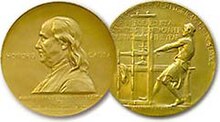
The Pulitzer Prize /ˈpʊlᵻtsər/ is an award for achievements in newspaper, magazine and online journalism, literature, and musical composition in the United States. It was established in 1917 by provisions in the will of American (Hungarian-born) Joseph Pulitzer who had made his fortune as a newspaper publisher, and is administered by Columbia University in New York City. Prizes are awarded yearly in twenty-one categories. In twenty of the categories, each winner receives a certificate and a US$10,000 cash award. The winner in the public service category of the journalism competition is awarded a gold medal.


  •  To Kill a Mocking Bird (South Gothic & Bildungacroman)


To Kill a Mockingbird is a novel by Harper Lee published in 1960. It was immediately successful, winning the Pulitzer Prize, and has become a classic of modern American literature. The plot and characters are loosely based on the author's observations of her family and neighbors, as well as on an event that occurred near her hometown in 1936, when she was 10 years old.
As Southern Gothic novel and a Bildungsroman, the primary themes of To Kill a Mockingbird involve racial injustice and the destruction of innocence. Scholars have noted that Lee also addresses issues of class, courage, compassion, and gender roles in the American Deep South. The book is widely taught in schools in the United States with lessons that emphasize tolerance and decry prejudice. Despite its themes, To Kill a Mockingbird has been subject to campaigns for removal from public classrooms, often challenged for its use of racial epithets.


mock (v.) make fun of ; amuse
eg. Are you mocking me?

atro-/aster-: star

astrology (n.) the study that assumes and attempts to interpret the influence of the heavenly bodies on human affairs.

*What is your sign? 你是什麼星座?

asterisk (n.) a small starlike symbol (*), used in writing and printing as a reference mark or to indicate omission, doubtful matter, etc.
asterisk 的圖片結果

  • Idiomatic expression

Idiomatic expression is a type of informal English that has a meaning different from the meaning of the words in the expression.

raining dogs and cats: very hard rain
eg. Wow! It is raining dogs and cats out there!

 greet to me: I don't understand
 eg. It is greet to me!


  • Apple of Discord


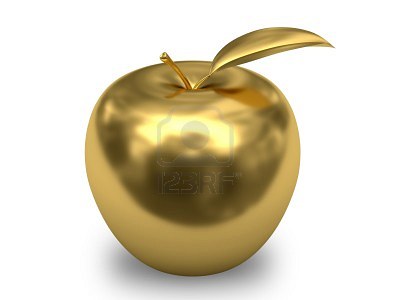
An apple of discord is a reference to the Golden Apple of Discord which, according to Greek mythology, the goddess Eris tossed in the midst of the feast of the gods at the wedding of Peleus and Thetis as a prize of beauty, thus sparking a vanity-fueled dispute among Hera, Athena, and Aphrodite that eventually led to the Trojan War (for the complete story, see The Judgement of Paris). Thus, "apple of discord" is used to signify the core, kernel, or crux of an argument, or a small matter that could lead to a bigger dispute.

  • James Bond and The Queen London 2012 Performance