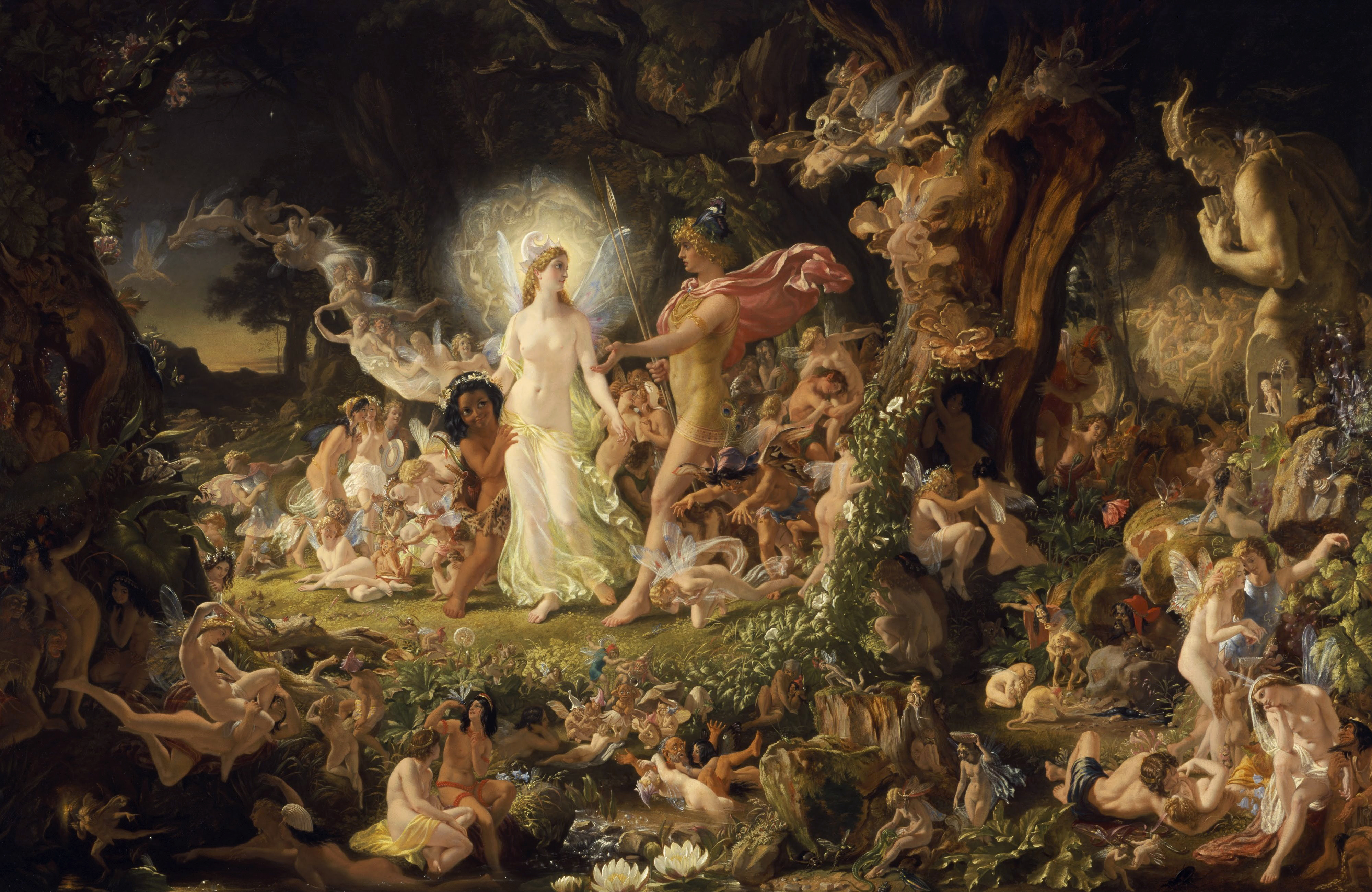
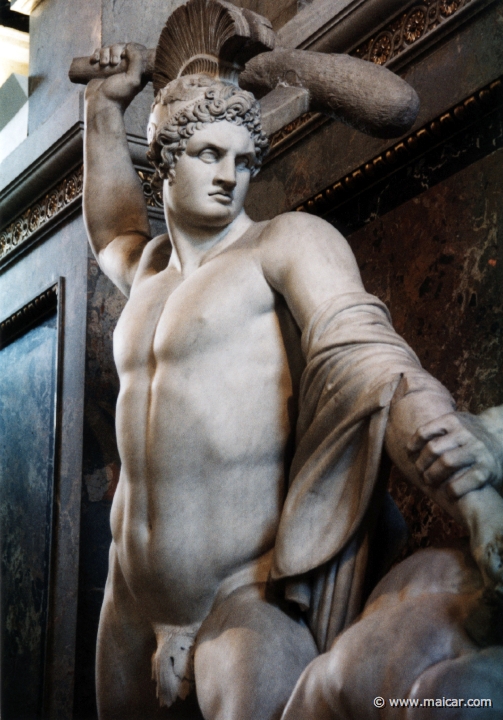
- Folklore, Myth and Legend
A myth is a traditional story that may answer life's overarching questions, such as the origins of the world and/or of a people. A myth can also be an attempt to explain mysteries, supernatural events, and cultural traditions. Sometimes sacred in nature, a myth can involve gods or other creatures. And a myth represents reality in dramatic ways.
A legend is a story purported to be historical in nature but which is without substantiation. Prominent examples include King Arthur, Blackbeard and Robin Hood. Where evidence of the existence of actual historical figures exists, figures like King Richard are legends due in large part to the many stories that have been created about them.
 Aesop was an Ancient Greek fabulist or story teller credited with a number of fables now collectively known as Aesop's Fables. Although his existence remains uncertain and no writings by him survive, numerous tales credited to him were gathered across the centuries and in many languages in a storytelling tradition that continues to this day. Many of the tales are characterized by animals and inanimate objects that speak, solve problems, and generally have human characteristics.
Aesop's fable
Aesop's Fables or the Aesopica is a collection of fables credited to Aesop, a slave and storyteller believed to have lived in ancient Greece between 620 and 564 BCE. Of diverse origins, the stories associated with his name have descended to modern times through a number of sources and continue to be reinterpreted in different verbal registers and in popular as well as artistic media.
The fables originally belonged to the oral tradition and were not collected for some three centuries after Aesop’s death. By that time a variety of stories, jokes and proverbs were being ascribed to him, although some material was from much earlier or came from elsewhere. That process has continued until the present, with some of the fables unrecorded before the later Middle Ages and others arriving from outside Europe. The process is continuous and new stories are still being added to the Aesop corpus, even when they are demonstrably of more recent authorship.Many familiar fables of Aesop include "The Crow and the Pitcher", "The Tortoise and the Hare" and "The Lion and the Mouse".
> The Bat, the Birds, and the Beats
 A great conflict was about to come off between the Birds and the Beasts. When the two armies were collected together the Bat hesitated which to join. The Birds that passed his perch said: “Come with us”; but he said: “I am a Beast.” Later on, some Beasts who were passing underneath him looked up and said: “Come with us”; but he said: “I am a Bird.” Luckily at the last moment peace was made, and no battle took place, so the Bat came to the Birds and wished to join in the rejoicings, but they all turned against him and he had to fly away. He then went to the Beasts, but soon had to beat a retreat, or else they would have torn him to pieces. “Ah,” said the Bat, “I see now,”
He that is neither one thing nor the other has no friends.”
> The Ass Carrying Salt
 A certain Huckster who kept an Ass, hearing that Salt was to be had cheap at the sea-side, drove down his Ass thither to buy some. Having loaded the beast as much as he could bear, he was driving him home, when, as they were passing a slippery ledge of rock, the Ass fell into the stream below, and the Salt being melted, the Ass was relieved of his burden, and having gained the bank with ease, pursued his journey onward, light in body and in spirit. The Huckster soon afterwards set off for the sea-shore for some more Salt, and loaded the Ass, if possible, yet more heavily than before. On their return, as they crossed the stream into which he had formerly fallen, the Ass fell down on purpose, and by the dissolving of the Salt, was again released from his load. The Master, provoked at the loss, and thinking how he might cure him of this trick, on his next journey to the coast freighted the beast with a load of sponges. When they arrived at the same stream as before, the Ass was at his old tricks again, and rolled himself into the water; but he found to his cost, as he proceeded homewards, that instead of lightening his burden, he had more than doubled its weight.
>> Brothers Grimm
 The Brothers Grimm, Jacob (1785–1863) and Wilhelm Grimm (1786–1859), were German academics, philologists, cultural researchers, lexicographers and authors who together specialized in collecting and publishing folklore during the 19th century. They were among the best-known storytellers of folk tales, and popularized stories such as "Cinderella" ("Aschenputtel"), "The Frog Prince" ("Der Froschkönig"), "The Goose-Girl" ("Die Gänsemagd"), "Hansel and Gretel" ("Hänsel und Gretel"), "Rapunzel", "Rumpelstiltskin" ("Rumpelstilzchen"),"Sleeping Beauty" ("Dornröschen"), and "Snow White" ("Schneewittchen"). Their first collection of folk tales, Children's and Household Tales (Kinder- und Hausmärchen), was published in 1812.
> Rumpelstiltskin
 Rumpelstiltskin is a fairy tale popularly associated with Germany (where he is known as Rumpelstilzchen). The tale was one collected by the Brothers Grimm in the 1812 edition of Children's and Household Tales. According to researchers at Durham University and the Universidade Nova de Lisboa, the story originated around 4,000 years ago.
Story: Once there was a miller who was very poor and very boastful. He had a beautiful daughter named Lisa. The miller lied to the King about Lisa who could turn straw into gold. The King was so delightful and took Lisa to the tower room which full of straw and a spinning wheel. The King demanded Lisa to turn the straw into gold in three days or else she would be sentenced to death. Lisa was very sad as she would not able to grant the King’s whishes. Then, a stranger appeared suddenly and offered Lisa a help. The stranger was known as Rumpelstiltskin who spun straw into gold and in return Lisa gave him her necklace and ring. The King became so greedy and wanted more gold. Then, the King asked his servant to search for every last wisp of straw in the countryside so that Lisa could turn the straw into gold and promised her that she would become his queen if she granted his wishes or else he cut off her head. As Lisa was sitting sadly on the floor, Rumpelstiltskin appeared for the third time and offered his last help to Lisa. In return, Lisa had nothing to reward him. Rumpelstiltskin spun the straw into gold and for a promise Lisa would give her first-born child to him after she became a queen. After a year, the King and Lisa had a baby son. Rumpelstiltskin returned to claim his reward. The queen was frightened and offered him all the wealth she had if she could keep the child. Rumpelstiltskin refused and finally agreed to give up his claim to the child if the queen could guess his name in three days. At first she failed, but before the final night, her parents followed Rumpelstiltskin to the woods and they overheard him singing. While he was singing and hopping around the fire, they discovered his name as Rumpelstiltskin. When the dwarf came to the queen on the third day and she revealed his name, Rumpelstiltskin lost his bargain. He was so angry and stamped the floor so hard and vanished in a puff of smoke. Lisa’s father learnt his lesson and he promised her that he would never boast again.
>> Hans Christian Andersen
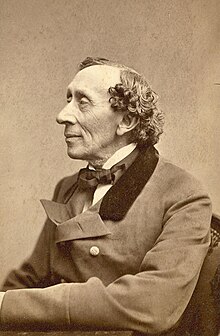 Hans Christian Andersen often referred to in Scandinavia as H. C. Andersen; 2 April 1805 – 4 August 1875) was a Danish author. Although a prolific writer of plays, travelogues, novels, and poems, Andersen is best remembered for his fairy tales. Andersen's popularity is not limited to children; his stories, called eventyr in Danish, express themes that transcend age and nationality.
Andersen's fairy tales, which have been translated into more than 125 languages, have become culturally embedded in the West's collective consciousness, readily accessible to children, but presenting lessons of virtue and resilience in the face of adversity for mature readers as well. Some of his most famous fairy tales include "The Emperor's New Clothes", "The Little Mermaid", "The Nightingale", "The Snow Queen", "The Ugly Duckling", "Thumbelina", and many more.His stories have inspired ballets, animated and live-action films, and plays.
> Scandinavia
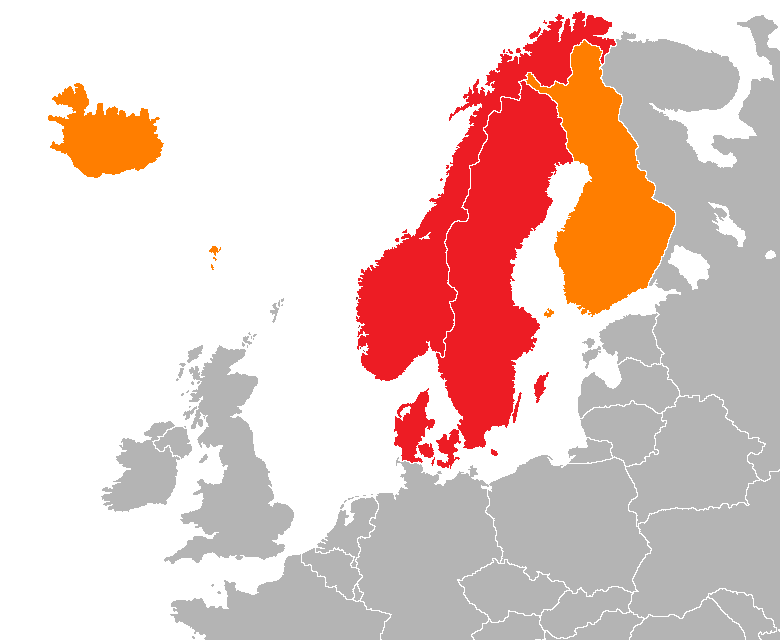 Scandinavia /ˌskændᵻˈneɪviə/ is a historical and cultural region in Northern Europe characterized by a common ethnocultural North Germanic heritage and mutually intelligible North Germanic languages.
Both Andersen’s poem “We are one people, we are called Scandinavians” and the corresponding melodies are examples of how he kept abreast of the ideological trends of the time. Scandinavism underwent a strong but short growth during the 1840s, and Andersen’s tribute to it became briefly known in several of the Nordic countries.
>> King Arthur
 King Arthur was a legendary British leader who, according to medieval histories and romances, led the defense of Britain against Saxon invaders in the late 5th and early 6th centuries AD. The details of Arthur's story are mainly composed of folklore and literary invention, and his historical existence is debated and disputed by modern historians. The sparse historical background of Arthur is gleaned from various sources, including the Annales Cambriae, the Historia Brittonum, and the writings of Gildas. Arthur's name also occurs in early poetic sources such as Y Gododdin.
 Fable is a very short story containing talking animals or forces of nature and one that teaches us a moral lesson. Often the moral of the story is expressed at the end of the story to make children learn a lot from the short story. Aesop’s fables are the most famous fables around the world though Jatak Kathayein from Budhism and Panchatantra written by Vishnu Sharma in Hindu religion are also very popular fables. Even epics like Ramayana and Mahabharata contain fables within them that are very good moral lessons for people till today.
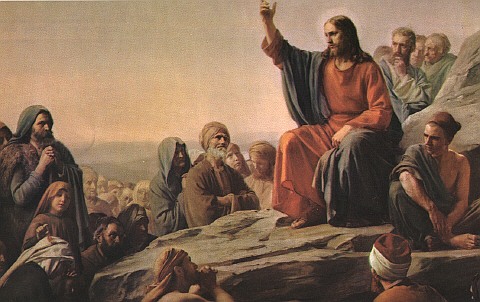 Parable is a short story that teaches a moral lesson to the reader or listener. Parables contain human characters only, and they are drawn from real world situations with real problems and real struggles of people. They also have spiritual flavors. The Good Samaritan and The Prodigal Son are two of the most well-known parables from the Gospel. The word parable comes from the Greek Parabole which means to draw comparison or analogy. One can learn how to behave and react when faced with a dilemma in real life situations as these parables teach by comparing the actions and behaviors of characters in them.

Eeyore is a character in the Winnie-the-Pooh books by A. A. Milne. He is generally characterized as a pessimistic, gloomy, depressed, anhedonic, old grey stuffed donkey who is a friend of the title character, Winnie-the-Pooh.
Eeyore appears in chapters IV, VI, VII, and X of Winnie-the-Pooh, and is mentioned in a few others. He also appears in all the chapters of The House at Pooh Corner except chapter VII. His name is an onomatopoeic representation of the braying sound made by a normal donkey, usually represented as "hee haw" in American English.
>> Onomatopoeia
 An onomatopoeia is a word that phonetically imitates, resembles or suggests the source of the sound that it describes. As an uncountable noun, onomatopoeia refers to the property of such words. Common occurrences of onomatopoeias include animal noises such as "oink", "miaow" (or "meow"), "roar" or "chirp". Onomatopoeias are not the same across all languages; they conform to some extent to the broader linguistic system they are part of;hence the sound of a clock may be tick tock in English, dī dā in Mandarin, or katchin katchin in Japanese, or "tik-tik" (टिक-टिक) in Hindi.
Alan Alexander Milne ( 18 January 1882 – 31 January 1956) was an English author, best known for his books about the teddy bear Winnie-the-Pooh and for various poems. Milne was a noted writer, primarily as a playwright, before the huge success of Pooh overshadowed all his previous work. Milne served in both World Wars, joining the British Army in World War I, and was a captain of the British Home Guard in World War II.
>> Anthropomorphic
 Anthropomorphism is the attribution of human traits, emotions, and intentions to non-human entities and is considered to be an innate tendency of human psychology. It has ancient roots as storytelling and artistic devices, and most cultures have traditional fables with anthropomorphized animals as characters. People have also routinely attributed human emotions and behavioural traits to wild as well as domestic animals.
Reader's Theater is a style of theater in which the actors do not memorize their lines. Actors use only vocal expression to help the audience understand the story rather than visual storytelling such as sets, costumes, intricate blocking, and movement. This style of performance of literature was initially lauded because it emphasized hearing a written text as a new way to understand literature.
Sir James Matthew Barrie, 1st Baronet, OM (9 May 1860 – 19 June 1937) was a Scottish novelist and playwright, best remembered today as the creator of Peter Pan. He was born and educated in Scotland but moved to London, where he wrote a number of successful novels and plays. There he met the Llewelyn Davies boys, who inspired him to write about a baby boy who has magical adventures in Kensington Gardens (included in The Little White Bird), then to write Peter Pan, or The Boy Who Wouldn't Grow Up, a "fairy play" about an ageless boy and an ordinary girl named Wendy who have adventures in the fantasy setting of Neverland.
 Peter Pan is a character created by Scottish novelist and playwright J. M. Barrie. A free spirited and mischievous young boy who can fly and never grows up, Peter Pan spends his never-ending childhood having adventures on the mystical island of Neverland as the leader of the Lost Boys, interacting with fairies, pirates, mermaids, Native Americans, and occasionally ordinary children from the world outside Neverland.
 Sir Arthur Ignatius Conan Doyle KStJ, DL (22 May 1859 – 7 July 1930) was a Scottish writer and physician, most noted for creating the fictional detective Sherlock Holmes and writing stories about him which are generally considered milestones in the field of crime fiction.
 Murder, She Wrote is an American crime drama television series starring Angela Lansbury as mystery writer and amateur detective Jessica Fletcher. The series aired for 12 seasons with 264 episodes from 1984 to 1996 on the CBS network. It was followed by four TV films and an unsuccessful spin-off series, which was produced in 1987, The Law & Harry McGraw. It is one of the most successful and longest-running television shows in history, averaging close to 26 million viewers per week in its prime, and was a staple of the CBS Sunday night lineup for a decade. In syndication, the series is still highly successful throughout the world.
Aesop was an Ancient Greek fabulist or story teller credited with a number of fables now collectively known as Aesop's Fables. Although his existence remains uncertain and no writings by him survive, numerous tales credited to him were gathered across the centuries and in many languages in a storytelling tradition that continues to this day. Many of the tales are characterized by animals and inanimate objects that speak, solve problems, and generally have human characteristics.Aesop's fable
Aesop's Fables or the Aesopica is a collection of fables credited to Aesop, a slave and storyteller believed to have lived in ancient Greece between 620 and 564 BCE. Of diverse origins, the stories associated with his name have descended to modern times through a number of sources and continue to be reinterpreted in different verbal registers and in popular as well as artistic media.
The fables originally belonged to the oral tradition and were not collected for some three centuries after Aesop’s death. By that time a variety of stories, jokes and proverbs were being ascribed to him, although some material was from much earlier or came from elsewhere. That process has continued until the present, with some of the fables unrecorded before the later Middle Ages and others arriving from outside Europe. The process is continuous and new stories are still being added to the Aesop corpus, even when they are demonstrably of more recent authorship.Many familiar fables of Aesop include "The Crow and the Pitcher", "The Tortoise and the Hare" and "The Lion and the Mouse".
> The Bat, the Birds, and the Beats
 A great conflict was about to come off between the Birds and the Beasts. When the two armies were collected together the Bat hesitated which to join. The Birds that passed his perch said: “Come with us”; but he said: “I am a Beast.” Later on, some Beasts who were passing underneath him looked up and said: “Come with us”; but he said: “I am a Bird.” Luckily at the last moment peace was made, and no battle took place, so the Bat came to the Birds and wished to join in the rejoicings, but they all turned against him and he had to fly away. He then went to the Beasts, but soon had to beat a retreat, or else they would have torn him to pieces. “Ah,” said the Bat, “I see now,”
He that is neither one thing nor the other has no friends.”
> The Ass Carrying Salt
A certain Huckster who kept an Ass, hearing that Salt was to be had cheap at the sea-side, drove down his Ass thither to buy some. Having loaded the beast as much as he could bear, he was driving him home, when, as they were passing a slippery ledge of rock, the Ass fell into the stream below, and the Salt being melted, the Ass was relieved of his burden, and having gained the bank with ease, pursued his journey onward, light in body and in spirit. The Huckster soon afterwards set off for the sea-shore for some more Salt, and loaded the Ass, if possible, yet more heavily than before. On their return, as they crossed the stream into which he had formerly fallen, the Ass fell down on purpose, and by the dissolving of the Salt, was again released from his load. The Master, provoked at the loss, and thinking how he might cure him of this trick, on his next journey to the coast freighted the beast with a load of sponges. When they arrived at the same stream as before, the Ass was at his old tricks again, and rolled himself into the water; but he found to his cost, as he proceeded homewards, that instead of lightening his burden, he had more than doubled its weight.>> Brothers Grimm
The Brothers Grimm, Jacob (1785–1863) and Wilhelm Grimm (1786–1859), were German academics, philologists, cultural researchers, lexicographers and authors who together specialized in collecting and publishing folklore during the 19th century. They were among the best-known storytellers of folk tales, and popularized stories such as "Cinderella" ("Aschenputtel"), "The Frog Prince" ("Der Froschkönig"), "The Goose-Girl" ("Die Gänsemagd"), "Hansel and Gretel" ("Hänsel und Gretel"), "Rapunzel", "Rumpelstiltskin" ("Rumpelstilzchen"),"Sleeping Beauty" ("Dornröschen"), and "Snow White" ("Schneewittchen"). Their first collection of folk tales, Children's and Household Tales (Kinder- und Hausmärchen), was published in 1812.> Rumpelstiltskin
Rumpelstiltskin is a fairy tale popularly associated with Germany (where he is known as Rumpelstilzchen). The tale was one collected by the Brothers Grimm in the 1812 edition of Children's and Household Tales. According to researchers at Durham University and the Universidade Nova de Lisboa, the story originated around 4,000 years ago.Story: Once there was a miller who was very poor and very boastful. He had a beautiful daughter named Lisa. The miller lied to the King about Lisa who could turn straw into gold. The King was so delightful and took Lisa to the tower room which full of straw and a spinning wheel. The King demanded Lisa to turn the straw into gold in three days or else she would be sentenced to death. Lisa was very sad as she would not able to grant the King’s whishes. Then, a stranger appeared suddenly and offered Lisa a help. The stranger was known as Rumpelstiltskin who spun straw into gold and in return Lisa gave him her necklace and ring. The King became so greedy and wanted more gold. Then, the King asked his servant to search for every last wisp of straw in the countryside so that Lisa could turn the straw into gold and promised her that she would become his queen if she granted his wishes or else he cut off her head. As Lisa was sitting sadly on the floor, Rumpelstiltskin appeared for the third time and offered his last help to Lisa. In return, Lisa had nothing to reward him. Rumpelstiltskin spun the straw into gold and for a promise Lisa would give her first-born child to him after she became a queen. After a year, the King and Lisa had a baby son. Rumpelstiltskin returned to claim his reward. The queen was frightened and offered him all the wealth she had if she could keep the child. Rumpelstiltskin refused and finally agreed to give up his claim to the child if the queen could guess his name in three days. At first she failed, but before the final night, her parents followed Rumpelstiltskin to the woods and they overheard him singing. While he was singing and hopping around the fire, they discovered his name as Rumpelstiltskin. When the dwarf came to the queen on the third day and she revealed his name, Rumpelstiltskin lost his bargain. He was so angry and stamped the floor so hard and vanished in a puff of smoke. Lisa’s father learnt his lesson and he promised her that he would never boast again.
>> Hans Christian Andersen
Hans Christian Andersen often referred to in Scandinavia as H. C. Andersen; 2 April 1805 – 4 August 1875) was a Danish author. Although a prolific writer of plays, travelogues, novels, and poems, Andersen is best remembered for his fairy tales. Andersen's popularity is not limited to children; his stories, called eventyr in Danish, express themes that transcend age and nationality.Andersen's fairy tales, which have been translated into more than 125 languages, have become culturally embedded in the West's collective consciousness, readily accessible to children, but presenting lessons of virtue and resilience in the face of adversity for mature readers as well. Some of his most famous fairy tales include "The Emperor's New Clothes", "The Little Mermaid", "The Nightingale", "The Snow Queen", "The Ugly Duckling", "Thumbelina", and many more.His stories have inspired ballets, animated and live-action films, and plays.
> Scandinavia
Scandinavia /ˌskændᵻˈneɪviə/ is a historical and cultural region in Northern Europe characterized by a common ethnocultural North Germanic heritage and mutually intelligible North Germanic languages.Both Andersen’s poem “We are one people, we are called Scandinavians” and the corresponding melodies are examples of how he kept abreast of the ideological trends of the time. Scandinavism underwent a strong but short growth during the 1840s, and Andersen’s tribute to it became briefly known in several of the Nordic countries.
>> King Arthur
King Arthur was a legendary British leader who, according to medieval histories and romances, led the defense of Britain against Saxon invaders in the late 5th and early 6th centuries AD. The details of Arthur's story are mainly composed of folklore and literary invention, and his historical existence is debated and disputed by modern historians. The sparse historical background of Arthur is gleaned from various sources, including the Annales Cambriae, the Historia Brittonum, and the writings of Gildas. Arthur's name also occurs in early poetic sources such as Y Gododdin.
- Fables
Fable is a very short story containing talking animals or forces of nature and one that teaches us a moral lesson. Often the moral of the story is expressed at the end of the story to make children learn a lot from the short story. Aesop’s fables are the most famous fables around the world though Jatak Kathayein from Budhism and Panchatantra written by Vishnu Sharma in Hindu religion are also very popular fables. Even epics like Ramayana and Mahabharata contain fables within them that are very good moral lessons for people till today.
Talking animals, plants and other inanimate objects are chief characteristics of fables, the best examples of which are The Fox and the Grapes and the Ant and the Grasshopper.
- Parable
Parable is a short story that teaches a moral lesson to the reader or listener. Parables contain human characters only, and they are drawn from real world situations with real problems and real struggles of people. They also have spiritual flavors. The Good Samaritan and The Prodigal Son are two of the most well-known parables from the Gospel. The word parable comes from the Greek Parabole which means to draw comparison or analogy. One can learn how to behave and react when faced with a dilemma in real life situations as these parables teach by comparing the actions and behaviors of characters in them.
>> Differences between Fable and Parable
• Both parables and fables are short stories containing moral lessons for the readers but, whereas parables contain human characters only, fables are known to have talking-animals and plant with even super natural forces.
• Fables are set in an imaginary world, whereas parables have real humans facing the real world problems.
• Parables often have spiritual or religious aspect, whereas fables stay away from religion.
• Tortoise and the Hare and The Fox and the grapes are some of the most popular fables whereas The Prodigal Son and the Good Samaritan are examples of most popular parables.
• There are also secular parables such as The Emperor’s New Clothes.
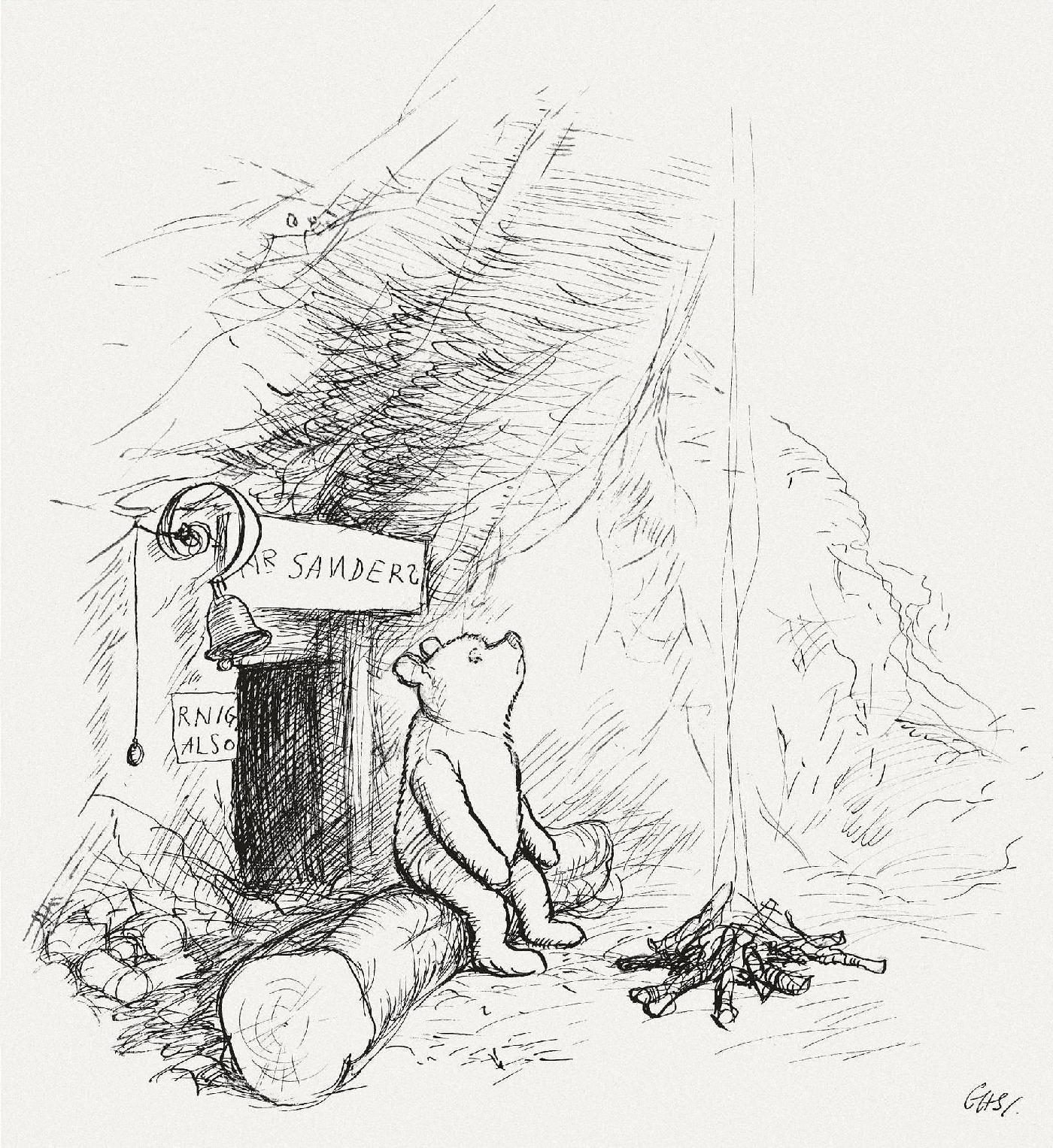 Winnie-the-Pooh, also called Pooh Bear, is a fictional anthropomorphic teddy bear created by English author A. A. Milne. The first collection of stories about the character was the book Winnie-the-Pooh (1926), and this was followed by The House at Pooh Corner (1928). Milne also included a poem about the bear in the children's verse book When We Were Very Young (1924) and many more in Now We Are Six (1927). All four volumes were illustrated by E. H. Shepard.
The Pooh stories have been translated into many languages, including Alexander Lenard's Latin translation, Winnie ille Pu, which was first published in 1958, and, in 1960, became the only Latin book ever to have been featured on The New York Times Best Seller list.
Hyphens in the character's name were dropped by Disney when the company adapted the Pooh stories into a series of features that became one of its most successful franchises. In popular film adaptations, Pooh Bear has been voiced by actors Sterling Holloway, Hal Smith, and Jim Cummings in English and Yevgeny Leonov in Russian.
>> Eeyore• Fables are set in an imaginary world, whereas parables have real humans facing the real world problems.
• Parables often have spiritual or religious aspect, whereas fables stay away from religion.
• Tortoise and the Hare and The Fox and the grapes are some of the most popular fables whereas The Prodigal Son and the Good Samaritan are examples of most popular parables.
• There are also secular parables such as The Emperor’s New Clothes.
- Winnie-the-Pooh (toy fantasy)
The Pooh stories have been translated into many languages, including Alexander Lenard's Latin translation, Winnie ille Pu, which was first published in 1958, and, in 1960, became the only Latin book ever to have been featured on The New York Times Best Seller list.
Hyphens in the character's name were dropped by Disney when the company adapted the Pooh stories into a series of features that became one of its most successful franchises. In popular film adaptations, Pooh Bear has been voiced by actors Sterling Holloway, Hal Smith, and Jim Cummings in English and Yevgeny Leonov in Russian.
Eeyore is a character in the Winnie-the-Pooh books by A. A. Milne. He is generally characterized as a pessimistic, gloomy, depressed, anhedonic, old grey stuffed donkey who is a friend of the title character, Winnie-the-Pooh.
Eeyore appears in chapters IV, VI, VII, and X of Winnie-the-Pooh, and is mentioned in a few others. He also appears in all the chapters of The House at Pooh Corner except chapter VII. His name is an onomatopoeic representation of the braying sound made by a normal donkey, usually represented as "hee haw" in American English.
>> Onomatopoeia
- A.A Milne
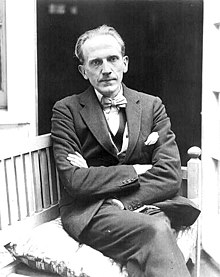
Alan Alexander Milne ( 18 January 1882 – 31 January 1956) was an English author, best known for his books about the teddy bear Winnie-the-Pooh and for various poems. Milne was a noted writer, primarily as a playwright, before the huge success of Pooh overshadowed all his previous work. Milne served in both World Wars, joining the British Army in World War I, and was a captain of the British Home Guard in World War II.
- E.H. Shepard
Ernest Howard Shepard (10 December 1879 – 24 March 1976) was an English artist and book illustrator. He is known especially for illustrations of the anthropomorphic animal characters in The Wind in the Willows by Kenneth Grahame and Winnie-the-Pooh by A. A. Milne.

- RT: Reader Theater
Reader's Theater is a style of theater in which the actors do not memorize their lines. Actors use only vocal expression to help the audience understand the story rather than visual storytelling such as sets, costumes, intricate blocking, and movement. This style of performance of literature was initially lauded because it emphasized hearing a written text as a new way to understand literature.
- William Blake "The Tyger"
Tyger Tyger, burning bright,
In the forests of the night;
What immortal hand or eye,
Could frame thy fearful symmetry?
In what distant deeps or skies.
Burnt the fire of thine eyes?
On what wings dare he aspire?
What the hand, dare seize the fire?
And what shoulder, & what art,
Could twist the sinews of thy heart?
And when thy heart began to beat,
What dread hand? & what dread feet?
What the hammer? what the chain,
In what furnace was thy brain?
What the anvil? what dread grasp,
Dare its deadly terrors clasp!
When the stars threw down their spears
And water'd heaven with their tears:
Did he smile his work to see?
Did he who made the Lamb make thee?
Tyger Tyger burning bright,
In the forests of the night:
What immortal hand or eye,
Dare frame thy fearful symmetry?
- J.M Barrie
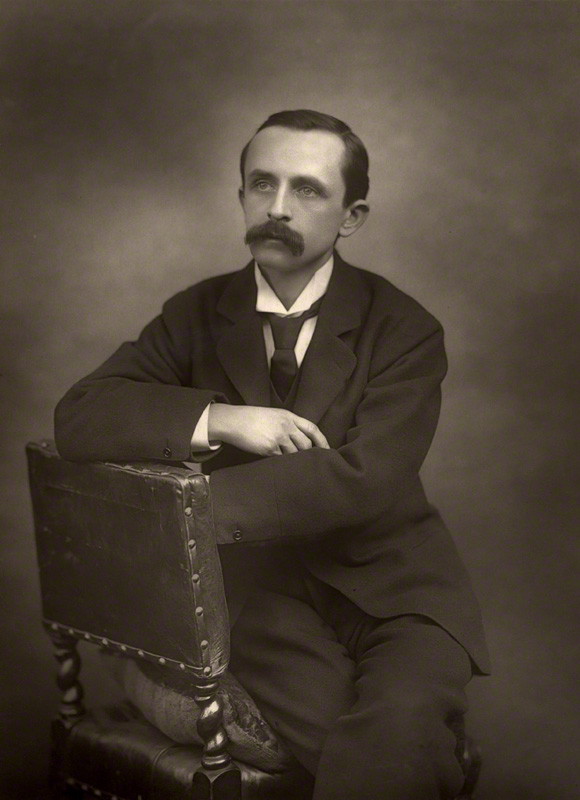
Sir James Matthew Barrie, 1st Baronet, OM (9 May 1860 – 19 June 1937) was a Scottish novelist and playwright, best remembered today as the creator of Peter Pan. He was born and educated in Scotland but moved to London, where he wrote a number of successful novels and plays. There he met the Llewelyn Davies boys, who inspired him to write about a baby boy who has magical adventures in Kensington Gardens (included in The Little White Bird), then to write Peter Pan, or The Boy Who Wouldn't Grow Up, a "fairy play" about an ageless boy and an ordinary girl named Wendy who have adventures in the fantasy setting of Neverland.
>> Peter Pen
- Arthur Conan Doyle
Sir Arthur Ignatius Conan Doyle KStJ, DL (22 May 1859 – 7 July 1930) was a Scottish writer and physician, most noted for creating the fictional detective Sherlock Holmes and writing stories about him which are generally considered milestones in the field of crime fiction.
He is also known for writing the fictional adventures of a second character he invented, Professor Challenger, and for popularising the mystery of the Mary Celeste. He was a prolific writer whose other works include fantasy and science fiction stories, plays, romances, poetry, nonfiction and historical novels.
>> Sherlock Holmes
Sherlock Holmes (/ˈʃɜːrlɒk ˈhoʊmz/) is a fictional private detective created by British author Sir Arthur Conan Doyle. Known as a "consulting detective" in the stories, Holmes is known for a proficiency with observation, forensic science, and logical reasoning that borders on the fantastic, which he employs when investigating cases for a wide variety of clients, including Scotland Yard.>> Murder, She Wrote