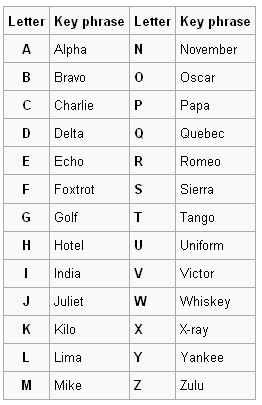
The most widely used radiotelephonic spelling alphabet. Although often called "phonetic alphabets", spelling alphabets are not associated with phonetic transcription systems such as the International Phonetic Alphabet.
The 26 code words in the NATO phonetic alphabet are assigned to the 26 letters of the English alphabet in alphabetical order.
The Book of Revelation, often known simply as Revelation or The Apocalypse of John, is a book of the New Testament that occupies a central place in Christian eschatology. Its title is derived from the first word of the text, written in Koine Greek: apokalypsis, meaning "unveiling" or "revelation". The Book of Revelation is the only apocalyptic document in the New Testament canon (although there are short apocalyptic passages in various places in the Gospels and the Epistles).
The New Testament is the second major part of the Christian biblical canon, the first part being the Old Testament, based on the Hebrew Bible. The Greek New Testament discusses the teachings and person of Jesus, as well as events in first-century Christianity. Christians regard both the Old and New Testaments together as sacred scripture. The New Testament (in whole or in part) has frequently accompanied the spread of Christianity around the world. It reflects and serves as a source for Christian theology and morality.
- Gospel of Matthew: the first book of the New Testament. The narrative tells how the Messiah, Jesus, rejected by Israel, finally sends the disciples to preach his Gospel to the whole world
- Gospelof Mark: the second book of the New Testament.Mark tells of the ministry of Jesus from his baptism by John the Baptist to his death and burial and the discovery of the empty tomb – there is no genealogy or birth narrative, nor, in the original ending at chapter 16, any post-resurrection appearances.
-Gospel ofLuke: the third and longest of the four canonical Gospels. It tells of the origins, birth, ministry, death, resurrection and ascension of Jesus Christ.
- Gospel of John: In the New Testament it traditionally appears fourth, after the synoptic gospels of Matthew, Mark, and Luke. John begins with the witness and affirmation of John the Baptist and concludes with the death, burial, resurrection, and post-resurrection appearances of Jesus.
The Immaculate Conception, according to the teaching of the Catholic Church, was the conception of the Blessed Virgin Mary in the womb of her mother, Saint Anne, free from original sin by virtue of
the foreseen merits of her son Jesus Christ. The Catholic Church teaches that Mary was conceived by normal biological means, but God acted upon her soul (keeping her "immaculate") at the time of her conception.
The Immaculate Conception is commonly and mistakenly taken to mean the conception of Mary's son Jesus Christ in her own womb, and the Virgin Birth of Jesus. These are covered by the Doctrine of Incarnation, while the Immaculate Conception deals with the conception of Mary herself, not that of her son.
"Frailty, thy name is woman"
From Shakespeare's Hamlet, 1602:
Must I remember? why, she would hang on him,
As if increase of appetite had grown
By what it fed on: and yet, within a month -
Let me not think on't - Frailty, thy name is woman! -
A little month, or ere those shoes were old
With which she follow'd my poor father's body...
Hamlet is angry that his mother, Gertrude, has married his uncle Claudius within a month of his father's death. The speech generalizes the attribution of weakness of character from one particular woman to womankind.
An American who, while serving as a physician in the United States Navy and afterwards, became famous for his humanitarian and anti-communist political activities in South East Asia and the United States until his early death from cancer. He authored three popular books that described his activities in Vietnam and Laos: Deliver Us From Evil, The Edge of Tomorrow, and The Night They Burned the Mountain. These three were later collected into a single volume and published as "Dr. Tom Dooley's Three Great Books." The book jacket of "The Edge of Tomorrow" states that Dooley traveled "to a remote part of the world in order to combat the two greatest evils afflicting it: disease and Communism.
A tactile writing system used by people who are blind and low vision. It is traditionally written with embossed paper. Braille-users can read computer screens and other electronic supports thanks to refreshable braille displays. They can write braille with the original slate and stylus or type it on a braille writer, such as a portable braille note-taker, or on a computer that prints with a braille embosser.
A right to silence warning given by police in the United States to criminal suspects in police custody (or in a custodial interrogation) before they are interrogated to preserve the admissibility of their statements against them in criminal proceedings.
The Bible is a collection of texts sacred in Judaism and Christianity. It is a collection of scriptures written at different times by different authors in different locations. Jews and Christians consider the books of the Bible to be a product of divine inspiration or an authoritative record of the relationship between God and humans.
Attitudes towards the Bible also vary amongst Christian groups. Roman Catholics, Anglicans and Eastern Orthodox Christians stress the harmony and imposola scriptura, or scripture alone. This concept arose during the Protestant Reformation, and many denominations today continue to support the use of the Bible as the only source of Christian teaching.
rtance of the Bible and sacred tradition, while Protestant churches focus on the idea of
With estimated total sales of over 5 billion copies, the Bible is widely considered to be the best selling book of all time. It has estimated annual sales of 100 million copies, and has been a major influence on literature and history, especially in the West where the Gutenberg Bible was the first mass-printed book. It was the first book ever printed using movable type.
The Old Testament is the first section of the Christian Bible, based primarily upon the Hebrew Bible, a collection of religious writings by ancient Israelites.It is the counterpart to the New Testament, the second portion of the Christian Bible. The Old Testament canon varies between Christian Churches; Protestants and Latter-Day Saints accept only the books found in the canon of the Hebrew Bible, dividing them into 39 books, while the Catholic, Eastern Orthodox, and Oriental Orthodox Churches accept somewhat larger collections of writings.
The Old Testament consists of many distinct books written, compiled, and edited by various authorsover a period of centuries. It is not entirely clear at what point the parameters of the Hebrew Bible, the basis for the Christian Old Testament, were fixed. Some scholars have opined that the canon of the Hebrew Bible was established already by about the 3rd century BC, or even later.
The books of the Old Testament can be broadly divided into several sections:
1) the first five books (Genesis, Exodus, Leviticus, book of Numbers and Deuteronomy) or Pentateuch (Torah)
2) the history books telling the history of the Israelites, from their conquest of Canaan to their defeat and exile in Babylon
3) the poetic and "Wisdom" books dealing, in various forms, with questions of good and evil in the world
4) and the books of the biblical prophets, warning of the consequences of turning away from God.
The Old Testament stresses the special relationship between God and his chosen people, Israel, but includes instructions for proselytes as well. This relationship is expressed in the biblical covenant (contract) between the two, received by Moses. The law codes in books such as Exodus and especially Deuteronomy are the terms of the contract: Israel swears faithfulness to God, and God swears to be Israel's special protector and supporter.
At some point in Isaac's youth, Abraham was commanded by God to offer his son up as a sacrifice in the land of Moriah. The patriarch traveled three days until he came to the mount that God told him of. He commanded the servants to remain while he and Isaac proceeded alone into the mount. Isaac carried the wood upon which he would be sacrificed. Along the way, Isaac asked his father where the animal for the burnt offering was, to which Abraham replied "God will provide himself a lamb for a burnt offering". Just as Abraham was about to sacrifice his son, he was interrupted by "the angel of the LORD", and he saw behind him a "ram caught in a thicket by his horns", which he sacrificed instead of his son. For his obedience he received another promise of numerous descendants and abundant prosperity. After this event, Abraham went to Beersheba. (Genesis 22:1–19)
Abraham
The first of the three biblical patriarchs. His story, told in chapters 11 through 25 of the Book of Genesis, plays a prominent role in Judaism, Christianity, Islam and the Bahá'í Faith.
Isaac
The second son of Abraham, the only son Abraham had with his wife Sarah. According to the Genesis narrative, Abraham brought Isaac to Mount Moriah, where, at God's command, Abraham built a sacrificial altar to sacrifice Isaac.
Original sin, also called ancestral sin, is the Christian doctrine of humanity's state of sin resulting from the fall of man, namely the sin of consuming from the tree of knowledge of good and evil,stemming from Adam's rebellion in Eden. This condition has been characterized in many ways, ranging from something as insignificant as a slight deficiency, or a tendency toward sin yet without collective guilt, referred to as a "sin nature", to something as drastic as total depravity or automatic guilt of all humans through collective guilt.
The concept of original sin was first alluded to in the 2nd century by Irenaeus, Bishop of Lyons in his controversy with certain dualist Gnostics. Other church fathers such as Augustine also developed the doctrine,seeing it as based on the New Testament teaching of Paul the Apostle (Romans 5:12–21 and 1 Corinthians 15:22) and the Old Testament verse of Psalm 51:5. Tertullian, Cyprian, Ambrose and Ambrosiasterconsidered that humanity shares in Adam's sin, transmitted by human generation. Augustine's formulation of original sin was popular among Protestant reformers, such as Martin Luther and John Calvin, who equated original sin with concupiscence, affirming that it persisted even after baptism and completely destroyed freedom. The Jansenist movement, which the Catholic Church declared to be heretical, also maintained that original sin destroyed freedom of will.
A technique of mural painting executed upon freshly-laid, or wet lime plaster. Water is used as the vehicle for the pigment to merge with the plaster, and with the setting of the plaster, the painting becomes an integral part of the wall. The word fresco (Italian: affresco) is derived from the Italian adjective fresco meaning "fresh", and may thus be contrasted with fresco-secco or secco mural painting techniques, which are applied to dried plaster, to supplement painting in fresco. The fresco technique has been employed since antiquity and is closely associated with Italian Renaissance painting.
An English writer and social critic. He created some of the world's best-known fictional characters and is regarded as the greatest novelist of the Victorian era. His works enjoyed unprecedented popularity during his lifetime, and by the twentieth century critics and scholars had recognised him as a literary genius. His novels and short stories enjoy lasting popularity.
A Christmas Carol in Prose, Being a Ghost-Story of Christmas,commonly known as A Christmas Carol, is a novella by Charles Dickens, first published in London by Chapman & Hall on 19 December 1843. The novella met with instant success and critical acclaim. A Christmas Carol tells the story of a bitter old miser named Ebenezer Scrooge and his transformation into a gentler, kindlier man after visitations by the ghost of his former business partner Jacob Marley and the Ghosts of Christmas Past, Present and Yet to Come. The book was written at a time when the British were examining and exploring Christmas traditions from the past as well as new customs such as Christmas cards and Christmas trees. Carol singing took a new lease on life during this time. Dickens's sources for the tale appear to be many and varied, but are, principally, the humiliating experiences of his childhood, his sympathy for the poor, and various Christmas stories and fairy tales.
A Christmas Carol remains popular—having never been out of print—and has been adapted many times to film, stage, opera, and other media.
David Coperfeild is the eighth novel by Charles Dickens. It was first published as a serial in 1849–50, and as a book in 1850. Many elements of the novel follow events in Dickens' own life, and it is probably the most autobiographical of his novels. In the preface to the 1867 edition, Dickens wrote, "like many fond parents, I have in my heart of hearts a favourite child. And his name is David Copperfield."
Movie: Meet me in St. Louise
A 1944 musical film from Metro-Goldwyn-Mayer which tells the story of an American family living in St. Louis at the time of the Louisiana Purchase Exposition World's Fair in 1904.
Garland debuted the standards "The Trolley Song", "The Boy Next Door", and "Have Yourself a Merry Little Christmas", all of which became hits after the film was released. Arthur Freed, the producer of the film, also wrote and performed one of the songs.
proponent (n.) apersonwhoarguesinfavorofsomething
example: Jane is a proponent of gender equality.
protagonist (n.) theleadingcharacter,hero,orheroineofadramaorotherliterarywork
example: She created a handsome young man as the protagonist of her new novel.
omni-: all
omniscient (adj.) havingcompleteorunlimitedknowledge,awareness,orunderstanding;perceivingallthings
example: The novel has an omniscient narrator.
omnipotent (adj.) almightyorinfiniteinpower,asGod
example: Jeson is an omnipotent man because he is good at anything.
-potent / -petent: power
potentate (n.) apersonwhopossessesgreatpower,asasovereign,monarch,orruler
example: The potentate in the city is an abominable person.
competent (adj.) havingsuitableorsufficientskill,knowledge,experience,etc.
example: Is Mary competent as a teacher?
astro-: star
astrology (n.) thestudyofthemotionsandrelativepositionsoftheplanets,sun,andmoon,interpretedintermsofhumancharacteristicsandactivities
example: My sister devotes herself to Astrology.
astronaut (n.) apersonengagedinortrainedforspaceflight
example: My brother's dream is being an astronaut.
astronomy (n.) thesciencethatdealswiththematerialuniversebeyondtheearth'satmosphere
example: Astronomy, as distinct from astrology, is an exact science.
ver- / vir-: truth
verdict (v.) thefindingsofajuryontheissuesoffactsubmittedtoitforexaminationandtrial;judgment
example: My wife's verdict on my cooking was very favourable.
virtual (adj.) havingtheessenceoreffectbutnottheappearanceorformof
example: He is in a state of virtual slavery.
-nov-: new
novice (n.) apersonwhoisnewtothecircumstances,work,etc.
example: I'm a complete novice at skiing.
novel (n.) anextendedworkinprose,eitherfictitiousorpartlyso,dealingwithcharacter,action,thought,etc, esp in the form of story
example: The novel is very interesting.
innovation (n.) somethingnewordifferentintroduced
example: The innovation is perfect.
hetero-: different
heterosexual (adj.) Biology.pertainingtotheoppositesexortobothsexes
example: The handsome, nice and heterosexual men are married.
antonym: homosexual
* Alan Turing Alan Mathison Turing was born on 23 June, 1912. He was a mathematician, cryptanalyst and the father of computer science. His pioneering work in the 1930s cracked the Nazi’s Enigma codes in World War II, and led to the invention of the modern computer. Turing died in 1954 of cyanide poisoning, two years after he was convicted for homosexual activity and branded a security risk
homo-: same
homogeneous (adj.) ofthesamekindornature;essentiallyalike
example: Japan has a largely homogeneous population.
Vocabulary
analogy (n.) acomparisonmadetoshowsuchasimilarity
example: I try to draw an analogy between two pictures.
commencement (n.) theceremonyofconferringdegreesorgrantingdiplomasattheendoftheacademicyear
example: I don't join the commencemont of senior high school
petite (adj.) (ofawoman)shortandhavingasmall,trimfigure;diminutive
example: Tina is a petite girl.
cinnamon (n.) a tropical tree, thespiceobtainedfromthebarkofthistree,usedforflavouringfoodanddrink
example: I don't like cinnamon.
onomatopoeia (n.) theformationofaword,ascuckoo,meow,honk,orboom,byimitationofasoundmadebyorassociatedwithitsreferent
example: The onomatopoeia is a common phenomenon both in English and Chinese.
scrape(= skyscraper) (n.) averytallmultistoreybuilding
example: The scrape is too tall to see the top of it.
computer illiterate (n.) a peron who doesn't know how to use computer
example: Peter is a computer illiterate.
cabinet (n.) 1. apieceoffurniturewithshelves,drawers,etc.,forholdingordisplayingitems 2. acounciladvisingapresident,sovereign,etc.,especiallythegroupofministersorexecutivesresponsibleforthegovernmentofanation
example: 1. The cabinet is beautiful.
2. The cabinet is an organization in the government.
theorem (n.) aruleorlaw,especiallyoneexpressedbyanequationorformula
example: Geometrical theorems grew out of empirical methods.
Keating is fired and Nolan takes over teaching the class. Keating interrupts the class to collect personal articles; before he leaves Todd shouts that all of them were forced to sign the letter that resulted in his dismissal and that Neil's death was not his fault. Todd stands on his desk and salutes Keating with the words "O Captain! My Captain!". Over half the rest of the class does the same, ignoring Nolan's orders to sit down until he gives up. Deeply touched by their gesture, Keating thanks the boys before departing.
"O Captain! My Captain!" is an extended metaphorpoem written in 1865 by Walt Whitman, about the death of American president Abraham Lincoln. The poem was first published in the pamphlet Sequel to Drum-Taps which assembled 18 poems regarding the American Civil War, including another Lincoln elegy, "When Lilacs Last in the Dooryard Bloom'd". It was included in Whitman's comprehensive collection Leaves of Grass beginning with its fourth edition published in 1867.
An American poet, essayist and journalist. A humanist, he was a part of the transition between transcendentalism and realism, incorporating both views in his works. Whitman is among the most influential poets in the American canon, often called the father of free verse. His work was very controversial in its time, particularly his poetry collection Leaves of Grass, which was described as obscene for its overt sexuality.
An American statesman, political theorist. He was the fourth President of the United States (1809–17). He is hailed as the "Father of the Constitution" for being instrumental in the drafting of the U.S. Constitution and as the key champion and author of the Bill of Rights. He served as a politician much of his adult life.
After the constitution had been drafted, Madison became one of the leaders in the movement to ratify it. His collaboration with Alexander Hamilton and John Jay produced The Federalist Papers (1788). Circulated only in New York at the time, they would later be considered among the most important treatises in support of the Constitution. He was also a delegate to the Virginia constitutional ratifying convention, and was instrumental to the successful ratification effort in Virginia. Like most of his contemporaries, Madison changed his political views during his life. During the drafting and ratification of the constitution, he favored a strong national government, though later he grew to favor stronger state governments, before settling between the two extremes late in his life.
A philosophical doctrine that suggests the lack of belief in one or more reputedly meaningful aspects of life. Most commonly, nihilism is presented in the form of existential nihilism, which argues that life is without objective meaning, purpose, or intrinsic value.Moral nihilists assert that morality does not inherently exist, and that any established moral values are abstractly contrived. Nihilism can also take epistemological or ontological/metaphysical forms, meaning respectively that, in some aspect, knowledge is not possible, or that reality does not actually exist.
Aristotle was a Greek philosopher and scientist born in the city of Stagira, Chalkidice, on the northern periphery of Classical Greece. His father, Nicomachus, died when Aristotle was a child, whereafter Proxenus of Atarneus became his guardian.At eighteen, he joined Plato's Academy in Athens and remained there until the age of thirty-seven (c. 347 BC). His writings cover many subjects – including physics, biology, zoology, metaphysics, logic, ethics, aesthetics, poetry, theater, music, rhetoric, linguistics, politics and government – and constitute the first comprehensive system of Western philosophy. Shortly after Plato died, Aristotle left AEncyclopædia Britannica, "Aristotle was the first genuine scientist in history ... [and] every scientist is in his debt.
The earliest surviving work of dramatic theory and the first extant philosophical treatise to focus on literary theory.
In it, Aristotle offers an account of what he calls "poetry" (a term which in Greek literally means "making" and in this context includes drama—comedy, tragedy, and the satyr play—as well as lyric poetry and epic poetry). They are similar in the fact that they are all imitations but different in the three ways that Aristotle describes:
Differences in music rhythm, harmony, meter and melody.
Difference of goodness in the characters.
Difference in how the narrative is presented: telling a story or acting it out.
In examining its "first principles", Aristotle finds: 1) imitation 2) genres 3)other concepts by which that of truth is applied/revealed in the poesis
His analysis of tragedy constitutes the core of the discussion.Although Aristotle's Poetics is universally acknowledged in the Western critical tradition, "almost every detail about his seminal work has aroused divergent opinions".
The work was lost to the Western world for a long time. It was available in the Middle Ages and early Renaissance only through a Latin translation of an Arabic version written by Averroes.
A philosopher and mathematician in
Classical Greece, and the founder of the Academy in Athens, the first
institution of higher learning in the Western world. He is widely considered
the most pivotal figure in the development of philosophy, especially the Western
tradition. Unlike nearly all of his philosophical contemporaries, Plato's
entire œuvre is believed to have survived intact for over 2,400 years.
Along with his teacher, Socrates, and his
most famous student, Aristotle, Plato laid the very foundations of Western
philosophy and science. Alfred North Whitehead once noted: "the safest
general characterization of the European philosophical tradition is that it
consists of a series of footnotes to Plato."In addition to being a foundational
figure for Western science, philosophy, and mathematics, Plato has also often
been cited as one of the founders of Western religion and spirituality,
particularly Christianity, which Friedrich Nietzsche, amongst other scholars,
called "Platonism for the people". Plato's influence on Christian
thought is often thought to be mediated by his major influence on Saint
Augustine of Hippo, one of the most important philosophers and theologians in
the history of Christianity.
The Academy
was founded by Plato (428/427 BC – 348/347 BC) in ca.
387 BC in Athens. Aristotle (384 BC – 322 BC) studied there for twenty years
(367 BC – 347 BC) before founding his own school, the Lyceum. The Academy
persisted throughout the Hellenistic period as a skeptical school, until coming
to an end after the death of Philo of Larissa in 83 BC. Although philosophers
continued to teach Plato's philosophy in Athens during the Roman era, it was
not until AD 410 that a revived Academy was established as a center for
Neoplatonism, persisting until 529 AD when it was finally closed by Justinian
I.
The Platonic
Academy has been cited by historians as the first higher learning institution
in the Western world.
A classical Greek (Athenian) philosopher credited as one of the founders of Western philosophy. He is an enigmatic figure known chiefly through the accounts of classical writers, especially the writings of his students Plato and Xenophon and the plays of his contemporary Aristophanes. Plato's dialogues are among the most comprehensive accounts of Socrates to survive from antiquity, though it is unclear the degree to which Socrates himself is "hidden behind his 'best disciple', Plato".
Through his portrayal in Plato's dialogues, Socrates has become renowned for his contribution to the field of ethics, and it is this Platonic Socrates who lends his name to the concepts of Socratic irony and the Socratic method, or elenchus. The latter remains a commonly used tool in a wide range of discussions, and is a type of pedagogy in which a series of questions is asked not only to draw individual answers, but also to encourage fundamental insight into the issue at hand. Plato's Socrates also made important and lasting contributions to the field of epistemology, and his ideologies and approach have proven a strong foundation for much Western philosophy that has followed.
A critical and philosophical term that carries a wide range of meanings, which include imitation, representation, mimicry, imitatio, receptivity, nonsensuous similarity, the act of resembling, the act of expression, and the presentation of the self. In ancient Greece, mimesis was an idea that governed the creation of works of art, in particular, with correspondence to the physical world understood as a model for beauty, truth, and the good. Plato contrasted mimesis, or imitation, with diegesis, or narrative. After Plato, the meaning of mimesis eventually shifted toward a specifically literary function in ancient Greek society, and its use has changed and been reinterpreted many times since then.
One of the best-known modern studies of mimesis, understood as a form of realism in literature, is Erich Auerbach's Mimesis: The Representation of Reality in Western Literature, which opens with a famous comparison between the way the world is represented in Homer's Odyssey and the way it appears in the Bible. From these two seminal Western texts, Auerbach builds the foundation for a unified theory of representation that spans the entire history of Western literature, including the Modernist novels being written at the time Auerbach began his study. In art history, "mimesis", "realism" and "naturalism" are used, often interchangeably, as terms for the accurate, even "illusionistic", representation of the visual appearance of things.
-er, -or, -ist, -ian, -ant: suffix for people's (profession)
-er
teacher (n.) apersonwho teaches orinstructs,especiallyasaprofession;instructor
example: My dream is being a teacher.
catcher (n.) Baseball.theplayerstationedbehindhomeplate,whosechiefdutyisto catch pitchesnothitbythebatter
example: The catcher caught the ball.
painter (n.) apersonwhocoatswallsorothersurfaceswithpaint, especiallyasanoccupation
example: The painter is painting the wall.
-or
doctor (n.) apersonlicensedtopracticemedicine,asaphysician,surgeon,dentist,orveterinarian
example: An apple a day keeps the doctor away.
-ist
artist (n.) apersonwhoproducesworksinanyoftheartsthatareprimarilysubjecttoaestheticcriteria
example: My brother is an artist.
violinist (n.) apersonwhoplaysthe violin
example: The violinist performed well.
psychiatrist (n.) aphysicianwhopractices psychitry
example: Tim is the best psychiatrist in there.
-ian
physician (n.) apersonwhoislegallyqualifiedtopracticemedicine
example: My sister is a physician in the hospital
comedian (n.) aprofessionalentertainerwhoamusesbyrelatinganecdotes,actingoutcomicalsituations,engaginginhumorousrepartee
example: The performance of this comedian is so interesting that audiences laugh loudly.
-ant
applicant (n.) apersonwho applies fororrequestssomething
example: As the wage of the job was ow, there were few applicants for it.
attendant (n.) apersonwho attends another,astoperformaservice
example: The atendant of this activity is too many to count.
March / Parade / Demonstration
March(n.) the organized, uniformed, steady and rhythmic walking forward, usually associated with military troops
A Farewell to Arms is a novel byErnest Hemingway set during the Italian campaign of World War I. It is about a love affair between the expatriate American Henry and Catherine Barkley against the backdrop of the First World War, cynical soldiers, fighting and the displacement of populations.
An American novelist, short story writer, and journalist. His economical and understated style had a strong influence on 20th-century fiction, while his life of adventure and his public image influenced later generations. In 1918, he was seriously wounded and returned home. His wartime experiences formed the basis for his novelA Farewell to Arms (1929).
The second largest Christian Church in the world,with an estimated 225–300 million adherents. The Eastern Orthodox Church is one of the oldest religious institutions in the world, teaching that it is the One, Holy, Catholic and Apostolic Church established by Jesus Christ in his Great Commission to the apostles, and practicing what it understands to be the original faithpassed down from the Apostles.
A juvenile court (or young offender's court) is a tribunal having special authority to pass judgments for crimes that are committed by children or adolescents who have not attained the age of majority. In most modern legal systems, children and adolescents who commit a crime are treated differently from legal adults that have committed the same crime.
A 1956 television pilot directed by Orson Welles for a proposed Desilu Productions anthology series that was never produced. Based on a short story by John Collier, the short film narrated onscreen by Welles stars Dan Tobin, Joi Lansing and Rick Jason.